
ABT-5
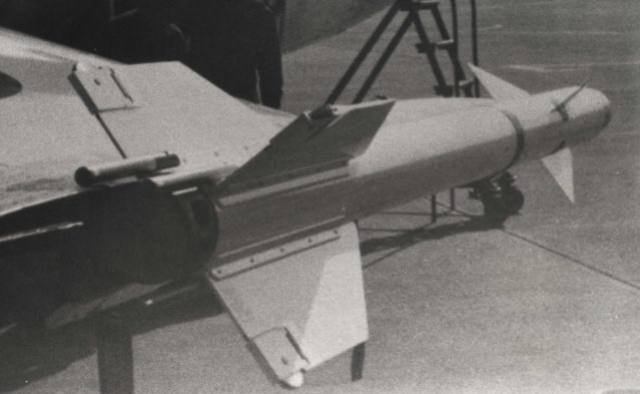
The ABT-5 is a short-range, supersonic air-to-air missile that served as the primary interception weapon for the Federation’s aerial wings throughout the mid-20th century. Its development traces a direct lineage to the late-war research conducted by the ITAD (Dailmhera Institute of Armaments Technology) during the Third Cataclysm. While the ABT-5 is recognized for its reliability and high speed, its most significant contribution to Laywenranian aeronautics was the perfection of the “spin-scan” infrared seeker.
Description
The foundational technology for the ABT-5 was born from an advanced guidance project codenamed Boinne (Droplet). Intended for the GB 13 glide bomb in a maritime strike capacity, the Boinne seeker utilized a singular infrared photocell as its primary detector.
The mechanism employed a reticle—a spinning disk marked with a series of opaque and transparent lines—rotating at a constant velocity. As infrared radiation from a target passed through the reticle, the photocell’s output was interrupted in a rhythmic pulse-train. By analyzing the frequency and phase of these interruptions, the onboard processor could determine the target’s bearing relative to the missile’s centerline. Although the Boinne system reached maturity just as hostilities ceased, it provided the technical springboard for the air-to-air missile prototypes of the late 1940s.
The ABT-5 is a slender, cylindrical weapon featuring a cruciform wing arrangement for high-speed stability. The airframe is 2,830 mm in length with a diameter of 130 mm, designed for low drag during its Mach 2.5 dash. The weapon carries an 11 kg blast-fragmentation warhead. The explosive composition consists of 80% RDX and 20% aluminum powder, the latter added to increase the incendiary effect and overpressure duration against aircraft skins. The missile is powered by a solid-fuel rocket motor, providing a 5 km effective range. It is capable of engaging targets performing maneuvers up to 7g, making it a formidable tool against the first generation of transonic jet aircraft. The standard infrared homing variants utilize the aforementioned spin-scan seeker, optimized for the heat signatures of jet exhausts. The minimum engagement distance is approximately 1 km, a limitation imposed by the time required for the seeker to stabilize and the fuse to arm post-launch.
Variants
- ABT-5: The baseline production model introduced in 1954, utilizing the original Boinne infrared seeker technology.
- ABT-5A: An incremental update featuring an improved seeker with enhanced sensitivity, allowing for more reliable locks at the fringes of the infrared spectrum.
- ABT-5R: A specialized departure from the heat-seeking lineage, this variant utilizes semi-active radar homing (SARH). It was developed to provide the fleet with an all-weather interception capability, requiring the launch aircraft to “illuminate” the target with its primary radar.
- ABT-5B: The definitive evolution of the series, incorporating a modernized proximity fuse and a refined airframe for increased range and maneuverability. This variant featured an advanced seeker capable of better discriminating between target heat and environmental clutter.
- Length: 2’830 mm
- Wingspan: 530 mm
- Diameter: 130 mm
- Weight: 80 kg
- Speed: Mach 2,5
- Range: 5 km effective
- Guidance: infrared homing, SARH (LLR-5R)
- Warhead: 11 kg blast fragmentation (80 % RDX, 20% Aluminium powder)
Public Domain
ABT-4
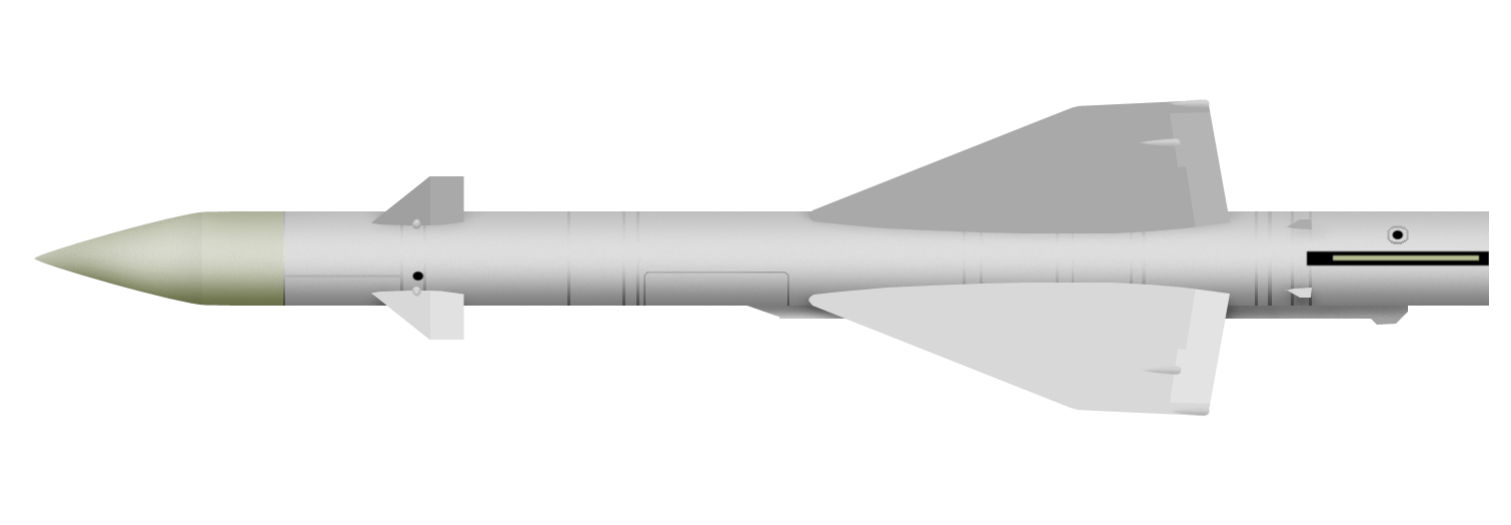
The ABT-4 was a formidable medium-range interception missile developed by the Laywenranian WATIK to equip the Federation’s heavy interceptor wings. Commencing development in 1951 and entering formal service in 1958, the weapon was designed to prosecute high-altitude bombers and escort fighters at distances beyond the reach of visual-range armaments.
Description
Given its considerable dimensions and a launch weight of 280 kg, the ABT-4 was a substantial airframe. While its sheer size curtailed its efficacy in high-turn-rate dogfights, its high transit speed of Mach 3.8 made it an excellent pursuit weapon. In operational practice, Laywenranian pilots frequently employed a “mixed-salvo” tactic, launching both a Semi-Active Radar Homing (SARH) and an Infrared (IR) variant in quick succession. This dual-mode engagement forced an adversary to defend against two distinct guidance signatures simultaneously, thereby significantly enhancing the probability of a successful intercept before entering a close-quarters engagement with the more nimble ABT-5.
The ABT-4 is characterized by its elongated cylindrical fuselage and broad-chord cruciform wings, which provide the necessary lift for high-altitude maneuvering. The missile was fitted with a 40 kg blast-fragmentation warhead. Consistent with Laywenranian ordnance standards, the filler comprised 80% RDX for high-velocity detonation and 20% aluminum powder to enhance the thermal and blast radius against large-span targets. The missile utilized interchangeable seeker heads, a modular design choice that allowed for streamlined production of both radar-guided and heat-seeking versions. A high-impulse solid-fuel rocket motor provided the ABT-4 with a significant kinetic advantage, allowing it to reach an effective range of 22 km in its initial iteration.
Variants
- ABT-4R: The primary radar-homing variant, requiring target illumination from the interceptor’s fire-control radar. 195
- ABT-4T: The infrared-homing counterpart, designed to track the thermal exhaust signatures of enemy aircraft. 1958
- ABT-4RA: An upgraded SARH model featuring a more sensitive seeker. This iteration introduced a true “all-aspect” or head-on engagement capability and extended the range to 25 km.
- ABT-4TA: The infrared equivalent to the FuM modernization, benefitting from enhanced cooling for the seeker cell to improve lock-on reliability.
- ABT-4RB: A further refinement of the radar-guided variant, introducing advanced circuitry to resist electronic countermeasures and extending the effective range to 30 km.
- ABT-4TB: The final evolution of the IR lineage, featuring improved resistance against decoys and flares through more sophisticated signal processing.
- Length: 4’100 mm
- Wingspan: 950 mm
- Diameter: 300 mm
- Weight: 280 kg
- Speed: Mach 3,8
- Range: 1,5 – 22 km effective (A: 25 km, B: 30 km)
- Guidance: infrared homing or SARH
- Warhead: 40 kg blast fragmentation (80 % RDX, 20% Aluminium powder)
Public Domain
LBT-1
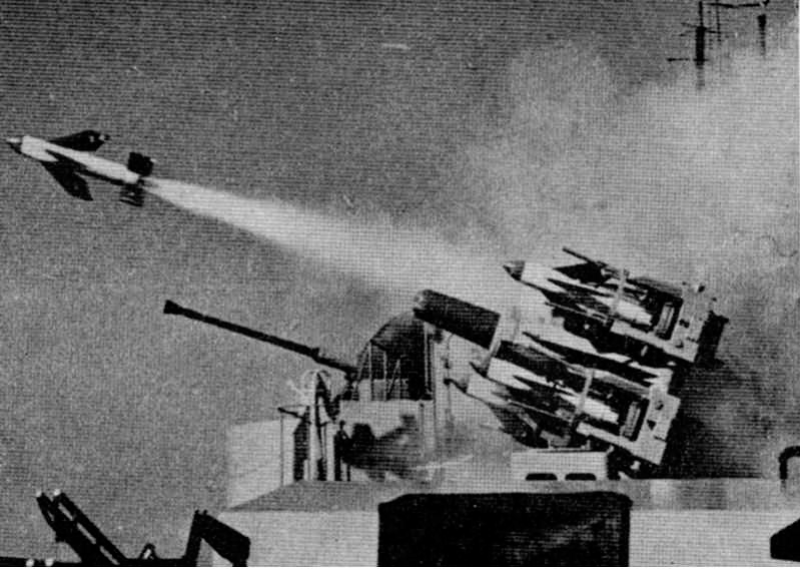
The LBT-1 represents the Federation’s inaugural foray into the realm of short-range naval guided munitions. Introduced into active service in 1962, the system was designed to provide a layered defense for surface combatants against the burgeoning threats of jet aircraft, early anti-ship missiles, and fast attack craft (FAC). Despite its subsonic flight profile, the LBT-1 earned a distinguished reputation within the fleet for its remarkable mechanical reliability and its relatively modest procurement costs, qualities that ensured its presence on a vast array of naval platforms, from major combatants to auxiliary supply ships.
Description
The missile is characterized by a compact airframe driven by a two-stage solid-fuel rocket motor. The initial booster stage provides the necessary thrust for a rapid departure from the launch rail, while the sustainer stage maintains a steady subsonic velocity throughout the interception profile. Aerodynamic control is achieved through four cruciformly arranged swept wings located amidships, which provide the necessary lift and maneuverability, while four smaller tail fins ensure flight stabilization.
Primary guidance for the LBT-1 is achieved via Command Line-of-Sight (CLOS). This method requires a remote operator to maintain visual or electronic contact with both the missile and the target simultaneously. Flight corrections are transmitted to the missile via a secure radio data link, adjusting its trajectory in real-time until impact. While this requires significant operator proficiency, the system’s simplicity reduces the likelihood of electronic failure and provides a robust counter-measure against early radar-jamming technologies.
The system underwent a significant modernization to enhance its autonomy and sensor integration as the maritime threat environment became increasingly complex.The initial LBT-1 production model relied upon a hybrid guidance philosophy, allowing the operator to steer the missile manually or slave the command link to the ship’s primary fire-control radar for more precise tracking. Following several years of operational feedback, the LBT-1B was introduced to incorporate Automatic Command Line-of-Sight (ACLOS) capabilities. This variant fundamentally expanded the engagement envelope by allowing the system to operate in a fully automatic radar-guided mode, wherein the computer processed the tracking data and issued commands without human intervention. To maintain the system’s famed reliability, the LBT-1B retained several redundant manual modes, including radar-assisted manual control, closed-circuit television (CCTV) guidance for low-visibility surface engagements, and a simplified “eyeball” emergency mode for use in environments where electronic sensors were compromised.
- LBT-1: Initial variant, could either be guided by an operator or by fire-control radar
- LBT-1B: ACLOS variant, could operate in an automatic radar-guided mode, manual radar guided, manual CCTV-guided or in ‘eyeball’ emergency guidance
- Length: 1’400 mm
- Wingspan: 750 mm
- Diameter: 250 mm
- Weight: 86 kg
- Speed: Mach 0,9
- Range: 0,5 – 6 km
- Guidance: CLOS
- Warhead: 20 kg continuous rod-warhead
Public Domain
LBT-2
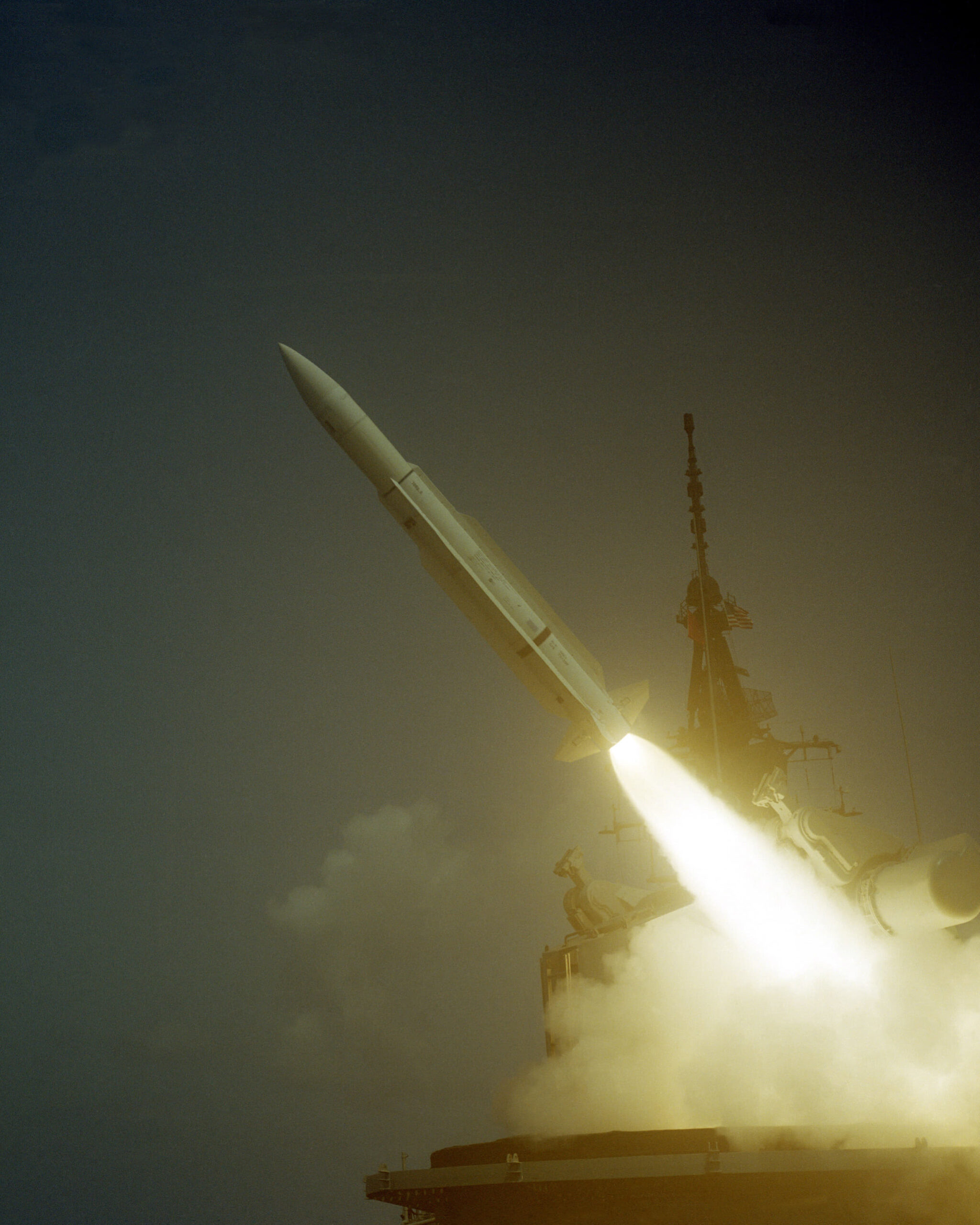
The LBT-2 is a cornerstone of the Federation’s maritime air defense, serving as the primary medium-to-long-range interception tool for capital ships and heavy surface combatants. Introduced in 1968, the system represented a significant leap in missile logic, moving away from continuous command guidance toward a more sophisticated “time-sharing” fire control philosophy. This allows a single vessel to manage multiple simultaneous engagements, as the missile does not require constant radar illumination throughout its entire flight profile.
Description
The airframe of the LBT-2 is a robust, cylindrical design featuring mid-body cruciform wings and tail-mounted control surfaces for stabilization and maneuvering at high altitudes. The guidance sequence is divided into distinct phases to maximize efficiency and system capacity. Upon launch, the missile’s onboard autopilot utilizes an inertial navigation suite to fly a pre-programmed, energy-efficient lofted trajectory toward the predicted intercept point. During this mid-course phase, the missile can receive periodic periodic updates via a radio data link from the ship’s fire control computer to account for target maneuvers.
It is only during the final seconds of the interception—the terminal phase—that the ship’s illumination radars must paint the target with high-frequency energy. The missile’s seeker then homes in on the reflected radar returns to achieve a precise kill. This “terminal-only” illumination requirement drastically reduces the ship’s electronic signature and prevents enemy aircraft from receiving early warning of a locked-on threat until it is often too late to take effective evasive action.
As the LBT-2 matured, the Federation focused on extending the engagement envelope and hardening the electronics against the increasingly congested electronic warfare environments of the late 20th century. The transition to the LBT-3 series in 1981 introduced a high-impulse thruster and a modernized seeker head, which effectively tripled the operational range. Later iterations focused on the “low-altitude gap,” improving the proximity fuse and signal processing to allow the missile to intercept sea-skimming threats and targets utilizing sophisticated decoys. The pinnacle of the lineage, the LBT-3E, utilized a massive additional booster stage to provide a long-range “outer-zone” defense capability, designed to intercept high-altitude reconnaissance assets and standoff jammer aircraft at ranges exceeding 400 km.
- LBT-2: The 1968 baseline production model with a 50 km range and a 20 km service ceiling.
- LBT-2B: A reliability-focused update featuring a modernized autopilot for smoother mid-course transitions.
- LBT-3: A 1981 redesign with a new seeker, high-ECM resistance, and a more powerful motor extending range to 150 km.
- LBT-3B: Introduced in 1983 with a specialized proximity fuse and improved logic for engaging low-flying targets in heavy clutter.
- LBT-3M: A 1987 modernization incorporating a dual-mode seeker with an additional infrared (IR) targeting sensor for passive homing.
- LBT-3E: A 1999 ultra-long-range variant; features an auxiliary booster, increasing length to 7 m and range to 400 km.
- Length: 4’800 mm
- Wingspan: 850 mm
- Diameter: 450 mm
- Weight: 450 kg
- Speed: Mach 3
- Range: 0,5 – 6 km
- Guidance: Inertial initial and Semi-active radar homing terminal
- Warhead: 80 kg blast fragmentation (80 % RDX, 20% Aluminium powder)
By Service Depicted: NavyCamera Operator: RICK MOORE (ID:DNSC8310458) [Public domain], via Wikimedia Commons
ABT-6
The ABT-6 is a versatile, high-performance air-to-air missile developed by WATIK to succeed the earlier generation of interceptor armaments. Although the development programme commenced in 1959, the complexities of its advanced electronic counter-countermeasures (ECCM) and refined aerodynamics resulted in a prolonged maturation period, with the weapon finally entering front-line service in 1971. Designed with a modular architecture similar to the ABT-4, the ABT-6 features interchangeable seeker heads, allowing ground crews to rapidly configure the missile for either Semi-Active Radar Homing (SARH) or Infrared (IR) guidance depending on the tactical requirement and prevailing weather conditions.
Description
The initial airframe established a robust baseline for supersonic interception, but it was the mid-1970s modernisation programme that fundamentally redefined the missile’s capabilities. To address the dual threats of high-altitude reconnaissance aircraft and high-speed, low-level strike fighters, the fuselage was significantly lengthened to accommodate a larger propellant load. The aerodynamic surfaces were redesigned into cruciform, low-aspect-ratio wings, which provide superior lift-to-drag ratios during high-speed manoeuvres while maintaining stability across a broad flight envelope. These refinements allowed the missile to engage targets at altitudes ranging from a mere 60 metres to a staggering 25 kilometres.
Central to the ABT-6’s efficacy is its sophisticated guidance unit, which transitioned from analogue logic to digital micro-processing. This digital backbone introduced a “lock-on after launch” (LOAL) capability, permitting the launch aircraft to fire the weapon before a final seeker lock is achieved, thereby reducing the pilot’s exposure to enemy fire. The reprogrammable nature of the digital processor allowed the Federation’s engineers to update the missile’s logic gates to counter emerging enemy electronic warfare signatures. Later iterations, particularly the RD and D series, introduced Continuous Wave (CW) Doppler radar seekers, which drastically improved the missile’s ability to distinguish between a target’s return and ground clutter, a vital requirement for the “look-down, shoot-down” role.
- ABT-6R: The 1971 baseline radar-guided model, capable of intercepting targets manoeuvring at up to 7g with a 30 km range.
- ABT-6T: The baseline infrared variant, optimized for tail-chase engagements with a 15 km range.
- ABT-6RM: Introduced in 1978, featuring the stretched airframe and upgraded digital ECCM suite.
- ABT-6TM: The infrared counterpart to the R-model, fitted with a significantly more sensitive seeker cell for all-aspect tracking.
- ABT-6RD: Introduced in 1987, this variant features a CW Doppler seeker and an elongated 4.1-metre fuselage, extending the range to 70 km and speed to Mach 5.
- ABT-6TE: A long-range infrared variant utilizing the stretched fuselage to provide a 70 km engagement envelope.
- Length: 3’600 mm
- Wingspan: 950 mm
- Diameter: 250 mm
- Weight: 217 kg
- Speed: Mach 5
- Range: see Variants
- Guidance: infrared homing or SARH
- Warhead: 35 kg blast fragmentation (80 % RDX, 20% Aluminium powder)
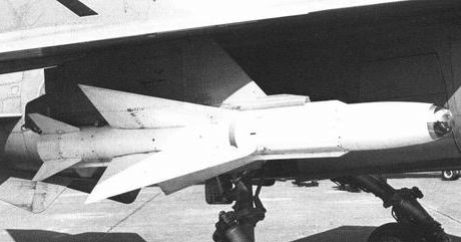
Public Domain
ABT-8
The ABT-8 is a short-range, all-aspect infrared homing missile developed to succeed the earlier ABT-5, which had reached the limits of its operational utility by the late 1960s. Introduced into service in 1973, the ABT-8 was designed to provide a robust solution for close-quarters aerial combat and point defense. The system is characterized by high airframe agility, allowing for the successful interception of targets performing maneuvers of up to 9g. Its design emphasizes a reduced minimum engagement distance, originally established at 300 metres, to ensure efficacy during high-rate-of-closure dogfights.
Description
The initial technical architecture centered on a nitrogen-cooled seeker head with a 25° field of view relative to the missile’s longitudinal axis. This was paired with a 10 kg blast fragmentation warhead composed of 80% RDX and 20% aluminium powder. Over its thirty-year service life, the missile underwent a series of iterative modernizations to address emerging electronic and infrared countermeasures, as well as to expand the engagement envelope through improved sensor technology and propulsion.
Refinement of the ABT-8 focused heavily on the seeker’s off-boresight capability and the missile’s reaction time. Following the introduction of an active-radar proximity fuse to improve lethality against small or agile targets, the development program shifted toward enhancing the pilot-to-missile interface. This culminated in the integration of helmet-mounted sighting systems, allowing the seeker to be slaved to the pilot’s line of sight.
Later modernization efforts in the 1980s and 1990s introduced cryogenic cooling for the seeker, which significantly improved thermal sensitivity and target discrimination against background clutter. The propulsion system was also revised to include a smoke-reduced propellant, decreasing the visual signature of the missile upon launch and reducing the likelihood of counter-detection. The final stages of the missile’s evolution involved a comprehensive transition to digital processing architectures, which allowed for sophisticated infrared counter-countermeasures (IRCCM) and a vastly expanded off-boresight engagement arc. Although the airframe was gradually phased out after the year 2000, its influence remains a benchmark for short-range defensive weaponry.
- ABT-8: The initial production model featuring nitrogen cooling and a 5.5 km effective range, introduced in 1973.
- ABT-8A: A specialized variant incorporating an active-radar proximity fuse for enhanced detonation reliability, introduced in 1977.
- ABT-8R: A prototype variant utilizing semi-active-radar-homing; however, the project did not proceed to serial production.
- ABT-8M: A 1981 update featuring a ±35° seeker view angle, a reduced 200 m minimum range, and compatibility with helmet-mounted displays.
- ABT-8S: A 1987 iteration utilizing a cryogenic cooling system, ±45° view angle, and a smoke-reduced motor for extended range.
- ABT-8D: The final major standard, introduced in 1994, featuring fully digital internal systems and a ±75° off-boresight capability.
- Length: 2’900 mm
- Wingspan: 500 mm
- Diameter: 160 mm
- Weight: 95 kg
- Speed: Mach 2,7
- Range: 5.5 km (baseline) to 12 km (advanced variants)
- Guidance: infrared homing
- Warhead: 10 kg blast fragmentation (80% RDX, 20% Aluminium powder)
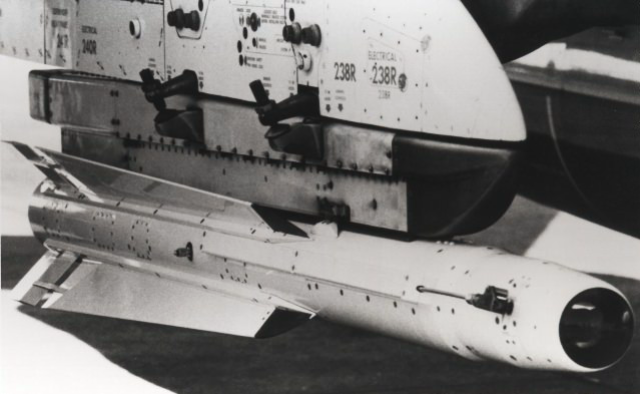
Public Domain
LBT-21
The LBT-21 is an all-weather, short-range surface-to-air missile system engineered by CEA Lynx. Designed primarily for the interception of low-altitude anti-ship missiles, precision-guided munitions, and fixed-wing aircraft, the system provides a tiered defensive screen for both naval task groups and mobile land-based formations. Its architectural evolution reflects a transition from manual command-guidance philosophies to autonomous, high-capacity engagement capabilities.
Description
The missile utilizes a slender, cruciform-wing airframe optimized for high-speed maneuvers. Early iterations relied heavily on a combination of Semi-Active Radar Homing (SARH) and electro-optical tracking, requiring the parent platform to maintain a continuous sensor lock on the target. This traditional approach ensured high accuracy in clear conditions but limited the number of simultaneous engagements the system could manage. Later developments addressed these constraints by integrating independent seeker heads and enhanced propulsion systems.
The mid-life modernization of the LBT-21 focused on the transition from traditional rail-launchers to vertical launch system (VLS) compatibility. To facilitate integration into standardized modular cells, the missile underwent significant internal reconfiguration. Engineers introduced Thrust Vector Control (TVC) nozzles at the exhaust manifold, allowing the projectile to execute rapid pitch-over maneuvers immediately after a cold-launch ejection. This modification effectively eliminated the “dead zone” typical of vertical systems, maintaining the LBT-21’s efficacy as a close-in weapon system.
To extend the engagement envelope without increasing the physical dimensions of the 150 mm airframe, the propulsion was upgraded to a dual-pulse solid rocket motor. This allows the missile to conserve kinetic energy for the terminal phase, ensuring sufficient maneuverability to intercept agile, sea-skimming threats at ranges exceeding 20 kilometres. The most substantial shift in lethality occurred with the introduction of Active Radar Homing (ARH). By placing the radar transmitter within the missile itself, the LBT-21 gained “fire-and-forget” capability, enabling the parent vessel to engage multiple threats across a 360-degree arc simultaneously.
- LBT-21: The baseline model introduced in 1974 for point defense. It featured a 10 km range and a 6 km ceiling, utilizing rail-launched LRS guidance.
- LBT-21M: An improved variant entering service in 1985. It extended the range to 13 km and improved sensor discrimination to allow for the interception of guided bombs and precision munitions.
- LBT-21V: Introduced in 1992 to coincide with the deployment of the first naval vertical launch cells. This variant introduced TVC (Thrust Vector Control) to facilitate rapid pitch-over maneuvers following a cold launch, ensuring the missile remained effective against close-range sea-skimmers. Mach 3.7
- LBT-21E: A 1997 iteration utilizing enhanced propellant chemistry and refined aerodynamics to reach a 17 km range and a 9 km ceiling.
- LBT-21G: Introduced in 2008, this variant introduces an Active Radar Homing seeker and a high-speed mid-course datalink. It incorporates the dual-pulse motor and TVC (exhaust manipulation) for vertical launch, extending the effective engagement envelope to 28 km while retaining the high-G agility provided by the TVC system.
- Length: 2’300 mm
- Wingspan: 540 mm
- Diameter: 150 mm
- Weight: 150 kg
- Speed: Mach 2,4/Mach 3.7 from Version V onwards
- Range: see Variants
- Guidance: ACLOS / ARH (LBT-21G onwards)
- Warhead: 14 kg blast fragmentation (80 % RDX, 20% Aluminium powder)
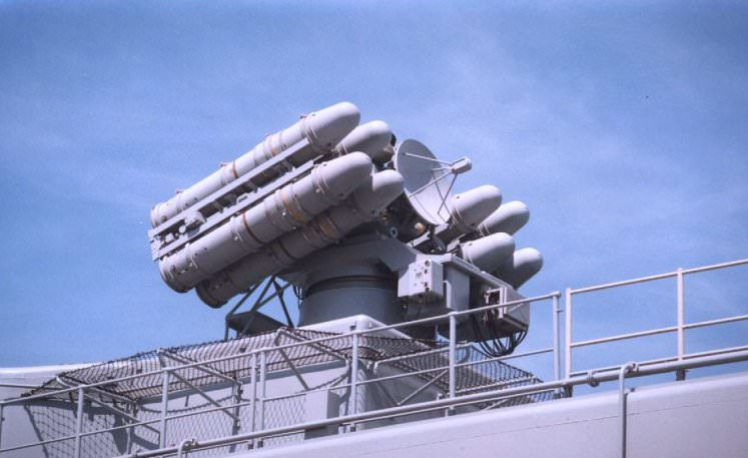
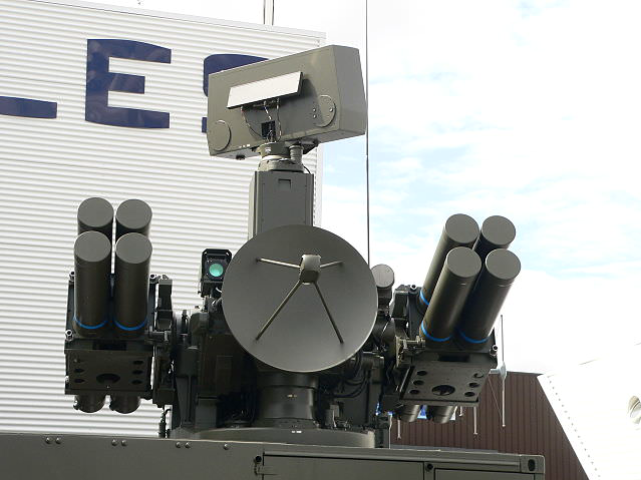
Public Domain
IBT-15
The IBT-15 is an advanced, all-weather, all-aspect missile system designed for multi-target engagement across air, surface, and maritime domains. Engineered to replace the ageing LLR-11, the system entered service in 1995 as a high-performance solution for short-to-medium-range air defence. The IBT-15 is notably versatile, capable of intercepting not only fixed and rotary-wing aircraft but also high-precision munitions, such as guided bombs and cruise missiles. Its architectural design prioritises high-velocity interception and extreme terminal agility, facilitated by a sophisticated integrated control suite.
Description
The missile’s airframe is a synthesis of aerodynamic finesse and raw power, featuring a Thrust Vectoring Control unit that allows for post-launch manoeuvres previously deemed impossible. During its initial evaluation phase, the IBT-15 demonstrated its “over-the-shoulder” capability, successfully engaging a target drone located directly behind the launch aircraft. This is made possible through a Lock-On After Launch (LOAL) protocol, where the missile is ejected from its rail or tube and receives initial targeting data via a high-speed datalink before its internal seeker acquires the threat. At ranges within 8 kilometres, the missile maintains a structural load factor of 50g, though this tapers to 30g at extended ranges as kinetic energy is traded for distance.
Modernisation of the IBT-15 has focused on refining its “fire-and-forget” autonomy and expanding its operational reach. Unlike earlier systems that required dedicated airframes for different roles, the IBT-15 was developed with a modular seeker philosophy. This allowed the same basic missile body to be fitted with either high-sensitivity infrared or active radar seekers, streamlining logistics for tri-service operators. The transition from the baseline 1995 models to the contemporary standards involved significant software upgrades to the digital processing units, enhancing the missile’s ability to distinguish between genuine targets and complex electronic or infrared countermeasures.
In the naval and land-based sectors, the IBT-15 has been adapted for vertical launch integration, often being “quad-packed” to increase the defensive density of modern hulls. Recent upgrade work has also explored the implementation of a dual-pulse rocket motor, designed to provide a secondary boost during the terminal phase of long-range intercepts. This ensures that the missile retains the necessary energy to perform high-G evasive manoeuvres even when engaging targets at the outer limits of its 50 km envelope.
- IBT-15T: The initial infrared-homing variant introduced in 1995, utilizing a high-resolution imaging seeker.
- IBT-15R: An active radar-homing variant introduced in 1998, providing all-weather, fire-and-forget capability for beyond-visual-range (BVR) engagements.
- IBT-15S (Sìneadh): A 2005 enhancement featuring an extended-range motor and improved data-link for better coordination with airborne early warning assets.
- IBT-15M (Mion-atharraichte): A 2012 mid-life update that unified the electronics suite, allowing the airframe to accept interchangeable seeker heads (IR or ARH) depending on mission requirements.
- IBT-15D (Didseatach): The current 2021 standard, featuring a fully digital signal processor and an improved TVC unit for enhanced performance against hyper-agile threats.
Specifications:
- Length: 3,300 mm
- Wingspan: 550 mm
- Diameter: 150 mm
- Weight: 100 kg
- Maximum Speed: Mach 4 (Air-launched), Mach 3 (Ground-launched)
- Effective Range: 0.2 – 50 km (Air), 1 – 25 km (Ground/Naval)
- Guidance: IR (Infrared) or ARH (Active Radar) depending on variant
- Warhead: 15 kg blast fragmentation (80% RDX, 20% Aluminium powder)
- Control: Combined Aerodynamic Fins and TVC (Thrust Vectoring)
Surface Launch Variants
To address the requirements for a modern, ground-based area defence system similar to the surface-launched high-performance systems used elsewhere, the IBT-15 family has been expanded into dedicated surface-to-air variants. These iterations leverage the missile’s existing high-agility airframe but modify the launch and guidance parameters for sustained ground-based or naval operations.
The IBT-15U (Surface Launched) series represents a significant departure from the standard rail-launched canister systems of the previous decade. By utilising a vertical launch configuration, these variants provide 360-degree coverage without the mechanical delay of rotating a launcher toward the threat. A critical component of this adaptation is the refined TVC unit, which allows for an immediate pitch-over maneuver upon clearing the launch cell. This capability is essential for engaging low-flying cruise missiles or sea-skimming threats that appear suddenly on the radar horizon.
The primary challenge in adapting an air-to-air missile for surface launch is the loss of the “free” kinetic energy and altitude provided by a carrier aircraft. To compensate, the IBT-15U variants utilise an enlarged solid-fuel motor with a multi-stage burn profile. This ensures that the missile reaches its cruising velocity of Mach 3 rapidly, while retaining enough energy for 50g maneuvers during the terminal phase of the intercept.
Furthermore, the surface-launched versions are frequently integrated into a wider networked defence environment. In this configuration, the missile does not rely solely on its own seeker for the entire flight. Instead, it receives high-update-rate targeting data from external ground-based or naval AESA radars via an encrypted datalink. This allows the missile to be launched toward a “silent” target, only activating its own IR or ARH seeker in the final seconds to ensure a high probability of kill while minimizing the target’s warning time.
- IBT-15UT: Introduced in 2010, this variant is the dedicated surface-launched infrared model. It features a larger rocket motor and a protective nose cone that is jettisoned shortly before seeker acquisition to manage thermal friction during the high-speed ascent.
- IBT-15UR: Entering service in 2014, this is the radar-guided surface-to-air standard. It is optimized for medium-range area defence, capable of intercepting threats out to 40 km when integrated with a high-power ground sensor suite.
- IBT-15UX: A 2022 development featuring a dual-pulse motor and a redesigned aerodynamic profile. This variant is specifically intended to bridge the gap between short-range point defence and long-range area denial, pushing the surface-launched engagement ceiling to 20 km.
Specifications:
- Length: 3,500 mm (extended for SL motor)
- Wingspan: 550 mm
- Diameter: 150 mm (190 mm at the booster base)
- Weight: 135 kg (inclusive of SL booster/motor)
- Maximum Speed: Mach 3.0 (Surface-launched)
- Effective Range: 1 km – 40 km (Standard SL); 50 km+ (SLX)
- Guidance: IR (Infrared) or ARH (Active Radar) with mid-course datalink
- Warhead: 15 kg blast fragmentation (80% RDX, 20% Aluminium powder)
- Launch Method: Cold or Hot Vertical Launch System (VLS) with TVC pitch-over technology
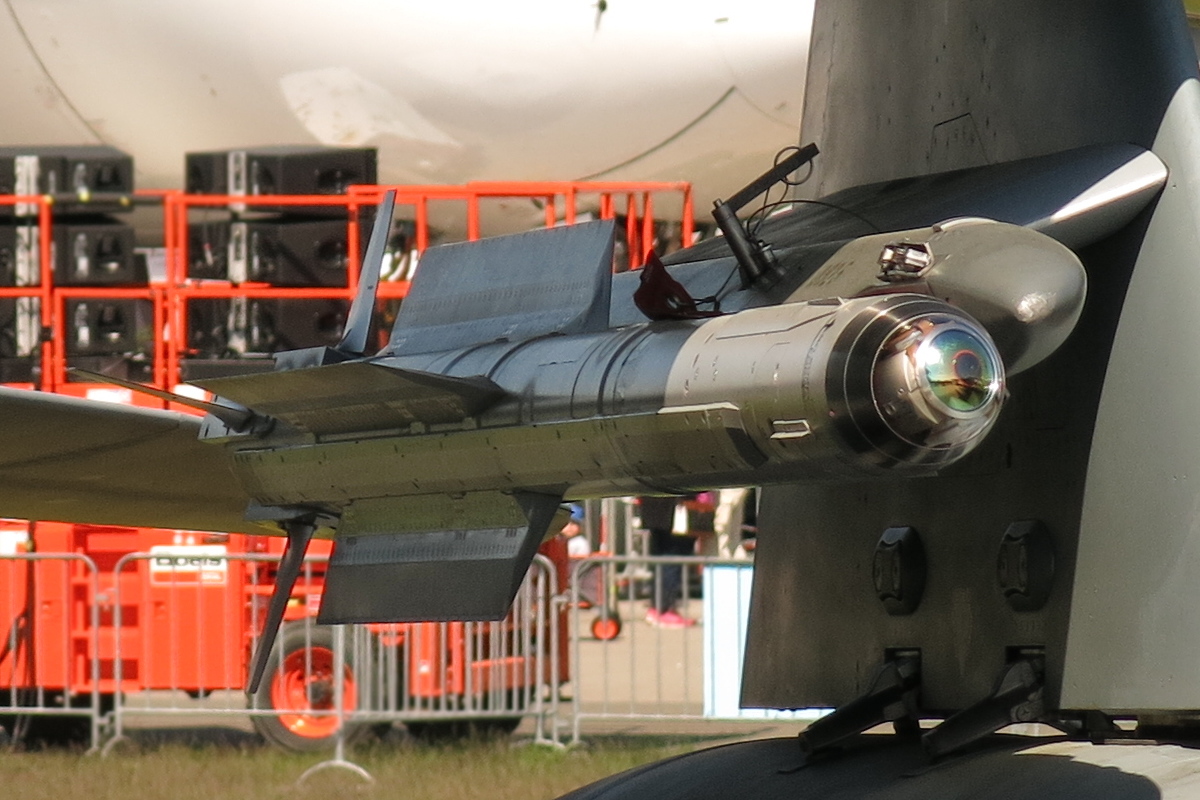
By Boevaya mashina – Own work, CC BY-SA 3.0, https://commons.wikimedia.org/w/index.php?curid=135753352
ABT-18
The ABT-18 is an advanced, beyond-visual-range air-to-air missile system developed by CEA Lynx to provide a decisive long-distance engagement capability for the national air wing. Introduced in 1991, it was designed to succeed the semi-active ABT-6, moving away from the requirement for continuous target illumination by the launch aircraft. The system is the primary long-range armament for the fighter jet fleets, offering an autonomous engagement capability that allows pilots to initiate maneuvers immediately after missile release.
Description
The technical foundation of the ABT-18 is its independent active radar seeker, which enables the missile to track and intercept targets without further assistance from the parent aircraft during the terminal phase of flight. This is supported by an encrypted mid-course datalink, allowing the launch platform to provide targeting updates while the missile is in transit. The airframe utilizes a 180 mm diameter to accommodate a larger high-explosive warhead and the sophisticated electronics required for long-distance signal processing.
The evolution of the ABT-18 has been defined by the transition from analogue circuitry to high-speed digital architectures. The initial 1991 models focused on the seamless integration of inertial sensors with shipborne or airborne radar datalinks to ensure reliable mid-course guidance over distances exceeding 100 kilometres. By the late 1990s, the focus shifted toward enhancing the missile’s resistance to electronic interference and improving the handover logic between the inertial phase and the active terminal phase.
A major technological leap occurred in the mid-2010s with the development of air-breathing propulsion. Traditional solid-rocket motors, while effective, suffer from diminishing energy levels during the final stages of long-range flight. To address this, engineers developed a throttleable ducted rocket system. This propulsion method allows the missile to regulate its fuel consumption based on the target’s distance and altitude, ensuring it retains sufficient kinetic energy for high-G maneuvers even at the outer limits of its engagement envelope. This modernization program culminated in a variant capable of maintaining high-supersonic speeds throughout its entire flight path, significantly increasing the “no-escape zone” for hostile aircraft.
- ABT-18R (Rèidar): The baseline variant introduced in 1991. It utilizes inertial navigation and mid-course updates to reach a range of 105 km before activating its autonomous radar seeker.
- ABT-18D (Didseatach): A 2003 modernization featuring fully digital internal systems, improved inertial sensors for better mid-course accuracy, and enhanced performance against electronic countermeasures.
- ABT-18S (Sìneadh): Introduced in 2010, this variant utilized an improved solid-fuel propellant grain and reduced-weight electronics to extend the effective range to 140 km.
- ABT-18Sr (Sruth): The premier 2017 variant featuring a throttleable air-breathing ramjet engine. This version maintains high terminal energy for intercepts beyond 160 km and is optimized for the suppression of high-value airborne assets.
- Length: 3,650 mm
- Wingspan: 525 mm
- Diameter: 180 mm
- Weight: 152 kg (Baseline); 185 kg (Sr-Ramjet variant)
- Maximum Speed: Mach 4.0 (Baseline); Mach 4.5+ (Sr-Variant)
- Effective Range: 105 km to 160+ km
- Guidance: Inertial Navigation with Mid-course Datalink and Terminal ARH
- Warhead: 18 kg directed-blast fragmentation (80% RDX, 20% Aluminium powder)
- Propulsion: Single-stage solid rocket or Throttleable Ducted Rocket (Sr-Variant)
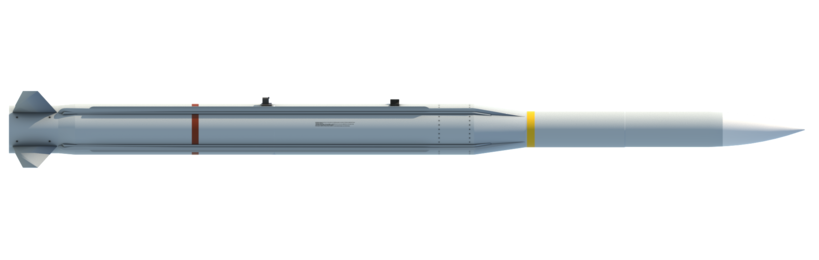
Defencie Nederlands, CC BY-SA 4.0 https://creativecommons.org/licenses/by-sa/4.0, via Wikimedia Commons