
Equipment
Fast Attack Craft
Iolaire-class Missile Boat
Commissioned in 1985, the Iolaire (eagle) class represented a optimization of the ‘Heavy Missile Boat’ concept pioneered by the preceding Earc-luachrach (Molch) class. Despite a displacement increase to 350 tonnes, the Iolaire achieved a superior top speed of 37 knots—a result of a refined length-to-beam ratio and a high-performance 12,000 kW triple-diesel propulsion suite. This restoration of high-velocity maneuverability was viewed by the Admiralty as a critical tactical requirement for the ‘Rapid Interdiction’ roles envisioned in the late Cold War era.
The class retained the formidable eight-missile IUT-15 battery of its predecessor but introduced the modernised IUT-15B variant, providing enhanced surface-engagement range and kinetic stopping power. Close-in protection is provided by a quad MANPAD launcher as well as a 30mm/60 md.69 CIWS Gatling. Equipped with a hull-mounted sonar, the Iolaire remains a potent dual-role platform, serving as the Federation’s primary high-speed littoral combatant into the 21st century.
- In Service: 1985 – present
- Displacement: 350 t standard
- Length/Beam/Draft: 49 m/8,6 m/2,1 m
- Power: 3 x MACO 20V-TDM-463 Diesel engines (4’400 kW each) with 13’200 kW combined, 37 kn, 3 waterjets
- Range: 2’200 nm @ 20 kn
- Complement: 34
- Built: 24
Armament
| Initial | Modernised |
|---|---|
| 2 x quad IUT-15B SSM launchers | 2 x quad IUT-15C SSM launchers |
| 1 x 30 mm/60 md. 60/85S | 1x 30 mm/60 md. 60/05 |
| 1 x 30 mm/55 md. 69/85 | 1 x 30 mm/55 md. 69/05 |
| 1 x quad LBT-85 launcher (+12 on magazine) | 1 x quad LBT-85B launcher (+12 on magazine) |
| removable Depth charge/mine rails | removable DC/mine rails |
Sensors
| Initial | Modernised |
|---|---|
| SIOM-45 Multifunction radar | SIOM-42 Multifunction radar |
| SUMA-37 Surface search/navigation radar | SUMA-43 Surface search/navigation radar |
| RSMT-22C fire control system | RSMT-22E fire control system |
| SDCL-34 Hull Sonar | SDCL-43 Hull Sonar |
| CTAI-32 ESM | CTAI-41 ESM |
| CIGA-39 EW Suite | CFAD-42 ECM Suite |
| ACNA-24 IFF | ACNA-45 IFF |
| GTAM-39 decoy launchers | GTAM-48 decoy launchers |
_2.JPG)
Konflikty.pl (Attribution), via Wikimedia Commons
Frigates
Aonran-Mòr-class frigate
The Aonran-Mòr-class (Great Sentinel) frigate was introduced in 1985 to consolidate the Federation’s escort tiers into a single, versatile platform. Designed by the Lasaireach Shipbuilding Union (C.L.L.), the hull utilizes a cellular construction method, allowing for the rapid integration of mission-specific equipment. The class is the first in the fleet to feature a fully integrated aviation facility and a high-capacity vertical launch system (VLS) as standard equipment.
Description
The Aonran-Mòr hull is optimized for sea-keeping in the North Reach, featuring a high-flared bow to reduce deck wetness. The internal layout is divided into twelve watertight compartments. Modular “weapon zones” allow for the main gun and VLS blocks to be replaced or upgraded without major structural cutting, a feature intended to extend the hull’s service life to 40 years.
The 40,000 kW CODAD plant is arranged in two independent engine rooms. Each room contains two diesel engines geared to a single shaft via a Multi-Input/Single-Output (MISO) gearbox. This configuration provides high redundancy; the ship can maintain cruise speeds on a single engine or utilize all four for combat maneuvers.
The ship acts as Laywenranias main escort ship for task groups. Its VLS capacity allows it to provide local area air defense, while its hangar and towed array sonar make it a capable deep-water ASW platform.
- In Service: 1986 – present
- Displacement: 3’200 t standard
- Length/Beam/Draft: 122 m/14,8 m/4,2 m
- Power: 4 x MACO 20V-STDM-563 Diesel engines (10’000 kW each) CODAD with 40’000 kW combined, 31 kn, 2 shafts
- Range: 6’500 nm @ 16 kn
- Complement: 150
- Hangar for 1 helicopter
- Built: 16
Armament
| Initial | Modernised |
|---|---|
| 1 x 100 mm md. 69 DP gun | 1 x 100 mm md. 69 DP gun |
| 2 x 30 mm/55 md. 69/81 CIWS | 2 x 30 mm/55 md. 69/05 CIWS |
| 2 x 30 mm/60 md.60/80S “Seabhag 30” revolver cannons | 2 x 30 mm/60 md.60/05S “Seabhag 30” revolver cannons |
| 1x 16-cell self-defence VLS (quad-pack LBT-21V) | 1x 16-cell self-defence VLS (quad-pack LBT-21G) |
| 2 x quad IUT-15B SSM launchers | 2 x quad IUT-15C SSM launchers |
| 2 x triple 400 mm torpedo launchers | 2 x triple 400 mm torpedo launchers |
| removable Depth charge/mine rails | removable DC/mine rails |
Sensors
| Initial | Modernised |
|---|---|
| SIOM-41 Multifunction radar | SIOM-42 Multifunction radar |
| SUMA-37 Surface search/navigation radar | SUMA-43 Surface search/navigation radar |
| RSMT-22C fire control system | RSMT-22E fire control system |
| SDCL-35 Hull Sonar | SDCL-45 Hull Sonar |
| STAS-39 towed array sonar | STAS-39A towed array sonar |
| CTAI-31 ESM | CTAI-42 ESM |
| CIGA-39 EW Suite | CFAD-42 ECM Suite |
| ACNA-24 IFF | ACNA-45 IFF |
| GTAM-39 decoy launchers | GTAM-48 decoy launchers |
| META-33 Torpedo decoys | META-33 Torpedo decoys |
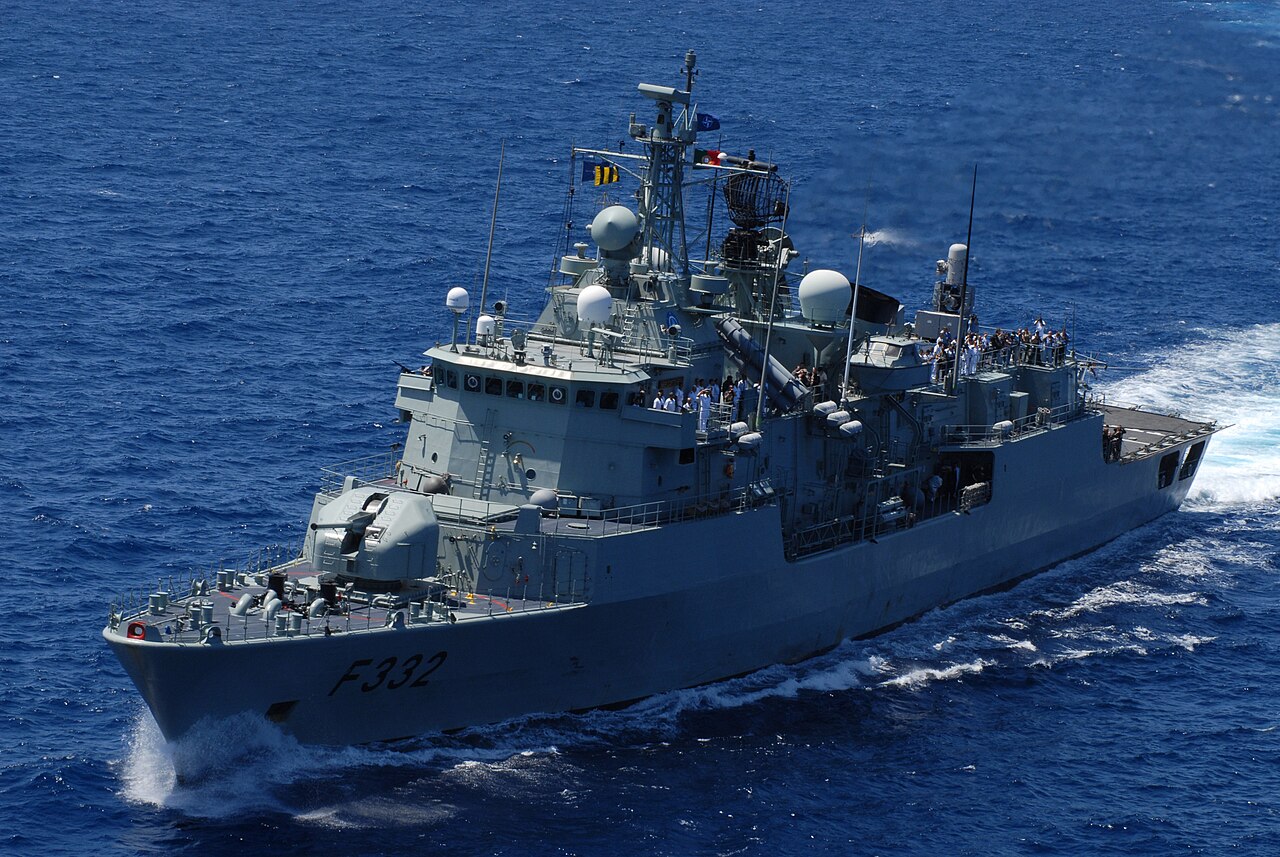
U.S. Navy photo by Mass Communication Specialist Seaman Apprentice Shonna Cunningham/Released, Public domain, via Wikimedia Commons
Cruisers
Banrigh nan Tonna-class cruiser
The Banrigh nan Tonna-class cruisers (Queen of the Waves) is a long‑range, multi‑role guided‑missile cruiser operated by Laywenrania’s Navy since 1990. Designed as a regional flagship and escort platform, it balances potent air‑defense, anti‑submarine warfare, and a strike capability within a compact, efficient hull suited to the archipelago’s distant island chains and open‑ocean patrols.
Description
Its CODAG propulsion system‑package — two MACO TuM‑58 turbines and two MACO 20V‑STDM‑563 diesel engines, delivering 44 MW total — pushes the ship to 32 knots and gives it a 6,500‑nautical‑mile range at 16 knots, ideal for extended patrols and long‑range deployments without heavy reliance on overseas bases.
The ship’s armament is centered on a 96‑cell standard VLS capable of launching surface‑to‑air missiles (SAMs), ASROC‑type anti‑submarine rockets, and medium‑range strike munitions. A single 100 mm md. 87 dual‑purpose gun provides naval gunfire support and anti‑surface capability, while two 30 mm md. 69 CIWS mounts offer close‑in defense against missiles and aircraft. Two quad IUT‑15C anti‑ship missile launchers give the class a credible anti‑surface strike punch, backed by two triple 400 mm torpedo launchers for ASW and short‑range anti‑ship engagements.
Sensors and electronic warfare have been systematically modernized over the decades. The SIOM‑31 PESA multifunction radar provides long‑range air search and guidance for the SAMs, while the SIOM-41 AESA radar enhances multi‑role tracking and low‑probability‑of‑intercept performance. With a crew of 260 and a single‑helicopter hangar, the Banrigh nan Tonna‑class is optimized for autonomous, long‑range operations around Laywenrania’s vast archipelago. It serves as a task‑force core, escorting logistics and support vessels, conducting blue‑water patrols, and projecting layered defense during regional crises.
- In Service: 1990 – present
- Displacement: 7’300 t standard
- Length/Beam/Draft: 161 m/21 m/6 m
- Power: CODAG with 2 x MACO TuM-58 turbines (22 MW each) and 2 x MACO 20V-STDM-563 (10 MW each) Diesel engines with 20 MW combined, 32 kn
- Range: 6’500 nm @ 16 kn
- Complement: 260
- Hangar for 2 helicopters
- Built: 2 (Banrigh nan Tonna, NicNaoimhin)
Armament
| Initial | Modernised |
|---|---|
| 1 x 100 mm md. 87 DP gun | 1 x 100 mm md. 87 DP gun |
| 2 x 30 mm/55 md. 69/81 CIWS | 2 x 30 mm/55 md. 69/05 CIWS |
| 2 x 30 mm/60 md.60/80S “Seabhag 30” revolver cannons | 2 x 30 mm/60 md.60/05S “Seabhag 30” revolver cannons |
| 96-cell Standard VLS | 96-cell Standard VLS |
| 2 x quad IUT-15B SSM launchers | 2 x quad IUT-15C SSM launchers |
| 2 x triple 400 mm torpedo launchers | 2 x triple 400 mm torpedo launchers |
Sensors
| Initial | Modernised |
|---|---|
| SATS-31 3D air search radar | RESA-44 air and surface surveillance radar |
| SIOM-41 Multifunction radar | RESA-42 air and surface search, tracking, and guidance radar |
| SUMA-37 Navigation radar | SUMA-43 Navigation radar |
| RSMT-22C fire control system | RSMT-22E fire control system |
| SDCL-35 Hull Sonar | SDCL-45 Hull Sonar |
| STAS-39 towed array sonar | STAS-39A towed array sonar |
| CTAI-31 ESM | CTAI-42 ESM |
| CIGA-39 EW Suite | CFAD-42 ECM Suite |
| ACNA-24 IFF | ACNA-45 IFF |
| GTAM-39 decoy launchers | GTAM-48 decoy launchers |
| META-33 Torpedo decoys | META-44 torpedo decoys |
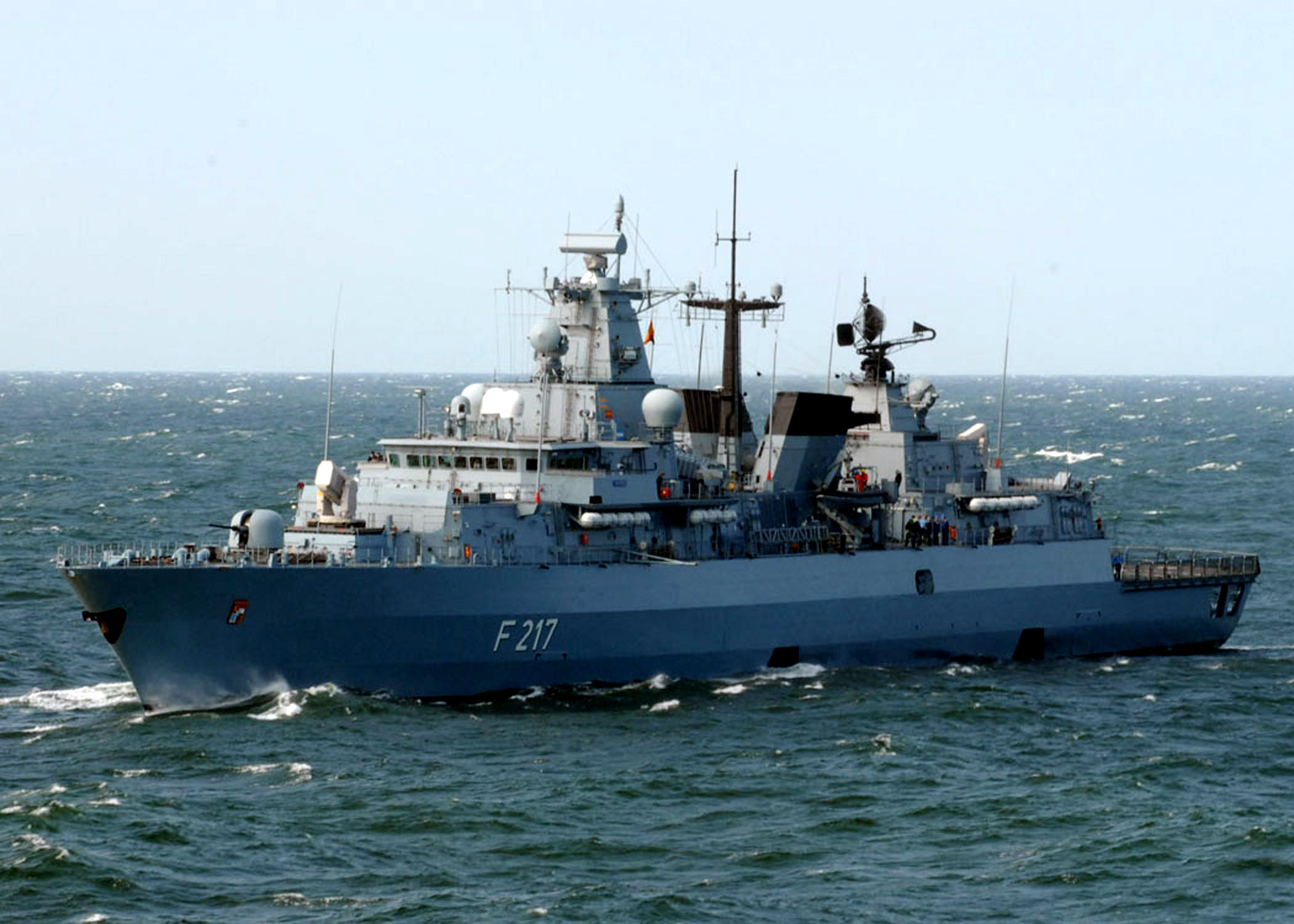
Mass Communication Specialist Second Class Mike Banzhaf, Public domain, via Wikimedia Commons
Bantighearna nan Speur-class cruiser
The Bantighearna nan Speur-class (Lady of the Skies) is a guided‑missile cruiser operated by the Laywenranian Navy as a successor to the earlier Banrigh nan Tonna‑class destroyers. Designed primarily for area‑air defence and limited ballistic missile defence, the class serves as a regional escort and flagship platform for task forces operating in the archipelago’s open and littoral waters.
Description
Two units have been built: Bantighearna nan Speur and Bana‑Phrionnsa an Tuath. Commissioned from 2005 onward, the class maintains similar core hull parameters as its predecessor, with a standard displacement of 7,750 tonnes, a length of 165 metres, a beam of 21 metres, and a draft of 6 metres. The propulsion plant is a combined diesel‑and‑gas arrangement with two high‑power turbines providing the majority of installed shaft power and two diesel engines for efficient cruising, giving a maximum speed of 34 knots and a range of 6,500 nautical miles at 16 knots. The ship carries a complement of 265 personnel and accommodates two helicopters in a hangar, supporting sustained anti‑submarine warfare, reconnaissance, and logistics operations.
Armament
The primary armament centres on a 96‑cell cold-launch vertical launching system used for medium- to long‑range surface‑to‑air missiles, anti‑submarine warfare ordnance, and land‑attack and anti‑ship munitions depending on loadout. A single 100 mm dual‑purpose gun provides naval gunfire support and surface engagement capability, while two 30 mm close‑in weapon systems offer point defence against aircraft and missiles. Two quad launchers for medium‑range surface‑to‑surface missiles enhance anti‑ship capability, and two triple 400 mm torpedo launchers contribute to the ship’s anti‑submarine warfare role.
Sensors and electronic warfare
The ship’s sensor suite is oriented toward long‑range air and surface surveillance, with a dedicated volume‑search radar providing three‑dimensional air tracking and a complementary multifunction radar handling horizon‑search, tracking, and fire‑control guidance. A navigation radar supports surface‑picture compilation and coastal navigation, while the fire‑control and combat management system integrates sensor inputs with the vertical launching system to coordinate air‑defence engagements. For under‑water warfare, a hull‑mounted sonar with three‑dimensional search capability is paired with a towed array sonar suite, giving layered detection and classification performance. Electronic warfare includes an electronic support measures suite, a directional electronic countermeasures system, and an identification‑friend‑or‑foe subsystem, supplemented by decoy launchers and torpedo decoys to mitigate both missile and torpedo threats.
Role and service
The Bantighearna nan Speur‑class fills the role of a regional air‑defence and ballistic‑threat screening platform, often operating as a flagship or core escort for task groups deploying convoys, amphibious forces, or logistical support vessels. Its combination of long‑range air‑search capability, multi‑mission sensor suite, and helicopter facilities allows it to conduct independent patrols as well as integrated operations within a wider naval alliance framework. The design reflects a doctrine emphasising resilient, networked defence rather than reliance on a single ship‑type for air‑defence coverage.
- In Service: 2005 – present
- Displacement: 7’750 t standard
- Length/Beam/Draft: 165 m/21 m/6 m
- Power: CODAG with 2 x MACO TuM-69 turbines (32 MW each) and 2 x MACO 20V-STDM-563 (10 MW each) Diesel engines with 20 MW combined, 34 kn
- Range: 6’500 nm @ 16 kn
- Complement: 265
- Hangar for 2 helicopters
- Built: 2 (Bantighearna nan Speur, Bana-Phrionnsa an Tuath)
Armament
| Initial | Modernised |
|---|---|
| 1 x 100 mm md. 87 DP gun | |
| 2 x 30 mm/55 md. 69/05 CIWS | |
| 2 x 30 mm/60 md.60/05S “Seabhag 30” revolver cannons | |
| 96-cell Standard VLS | |
| 2 x quad IUT-15C SSM launchers | |
| 2 x triple 400 mm torpedo launchers |
Sensors
| Initial | Modernised |
|---|---|
| RESA-44 air and surface surveillance radar | |
| RESA-42 air and surface search, tracking, and guidance radar | |
| SUMA-37 Navigation radar | SUMA-43 Navigation radar |
| RSMT-22E fire control system | |
| SDCL-45 Hull Sonar | |
| SGTF-42 Sonar Suite | |
| CTAI-42 ESM | |
| CFAD-42 ECM Suite | |
| ACNA-45 IFF | |
| GTAM-48 decoy launchers | |
| META-44 torpedo decoys |
Commander, U.S. Naval Forces Europe-Africa/U.S. 6th Fleet, Public domain, via Wikimedia Commons
Submarines
Breac-Class Submarine
Commissioned in 1992, the Breac-class is one of the Federation’s most advanced non-nuclear patrol submarines. Displacing 2,700 tonnes, the hull was widened to 10,2 meters, providing the internal volume necessary for a X-rudder configuration and an increase in automated combat systems. The Breac was the first class to integrate a Towed Array Sonar into a conventional diesel-electric hull, allowing the boat to detect threats miles behind its own acoustic “baffles.” Designed for the post-Cold War era, it serves as a versatile Information Hub, capable of deploying special forces, conducting long-range strategic strikes, and maintaining silent vigils in contested waters.
Description
The 10-meter beam allows for a Triple-Resilient Mounting system. Every major component, including the diesel generators and the propulsion motor, is suspended on multiple layers of rubber and hydraulic dampers, virtually eliminating the transmission of mechanical noise to the water. At 4 knots, the Breac is statistically indistinguishable from ambient ocean background noise.
Replacing the traditional “+” shaped tail fins, the Breac features an X-rudder. This provides superior maneuverability in shallow archipelago waters and allows the boat to “sit” on the seabed more safely during silent-running ambushes. All four surfaces provide both horizontal and vertical control, offering high redundancy if one fin is damaged. Despite being larger than the Tarr-geal, the crew has been reduced to 70. This reduction allowed for significantly improved “Habitability” (private bunks, better air scrubbers), which in turn increases the crew’s combat effectiveness during 60-day deployments.
- In Service: 1992 – present
- Displacement: 2’700 t surfaced
- Length/Beam/Draft: 77 m/10,2 m/7,4 m
- Power: diesel-electric propulsion, speed of 12 knots surfaced and 20 knots submerged
- Range: with snorkel 8’000 nm @ 7 kn, submerged 500 nm @ 3 kn
- Armament: 6 x 550mm bow Torpedo Launchers, 18 Torpedoes, 24 Mines, land attack cruise missiles, anti-ship missiles
- Sensors: active sonar, flank arrays, towed sonar, passive sonar, ESM, echolot, radar
- Complement: 70
- Built: 6
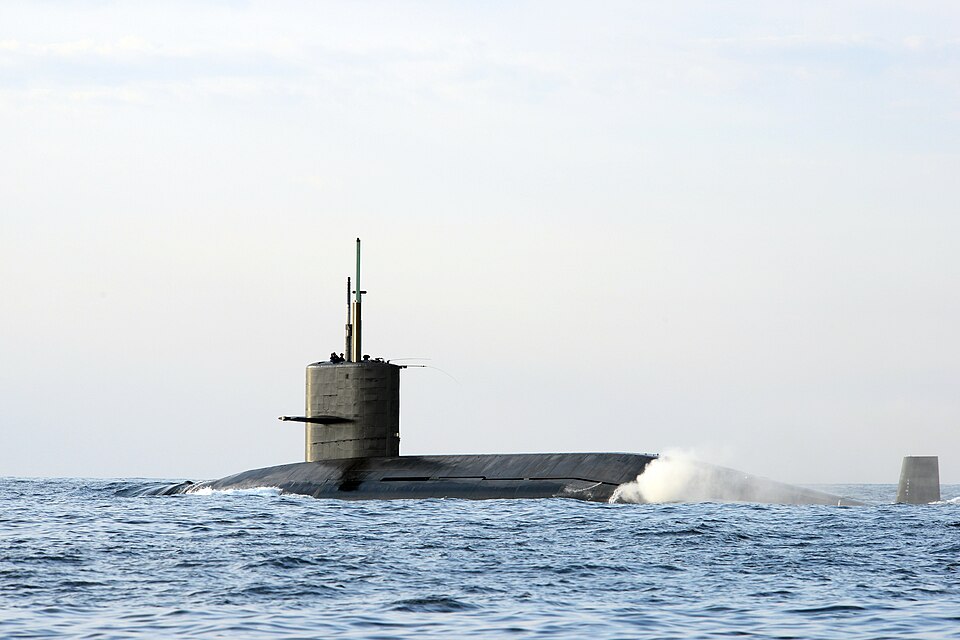
Kaijō Jieitai (海上自衛隊 / Japan Maritime Self-Defense Force), CC BY 4.0 https://creativecommons.org/licenses/by/4.0, via Wikimedia Commons
Sìthean-class Submarine
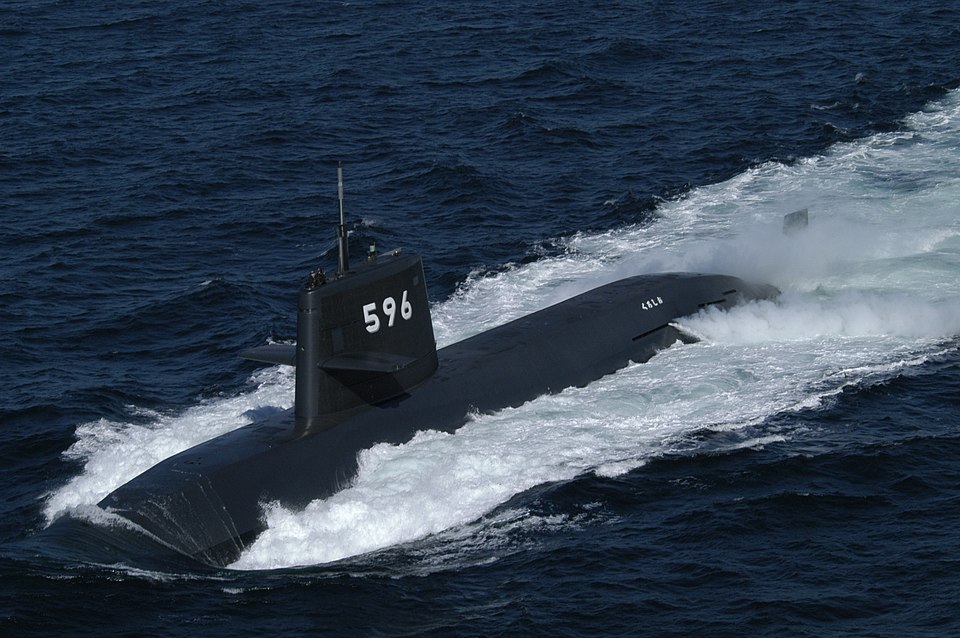
Commissioned in 1998, the Sìthean-class (fairy hill) was the first Federation submarine to fully move away from the traditional circular cross-section toward a “non-circular” or “leaf-shaped” hull. This design allowed for the integration of massive, conformal flank sonar arrays while maintaining a low acoustic cross-section. The name Sìthean refers to the mythical “hollow hills” of Gaelic folklore—places where things are hidden from human sight—reflecting the boat’s role as an invisible, deep-water fortress. With a length of 82 meters and a displacement of 3,000 tonnes, it is the largest and most lethal conventional submarine ever produced by the C.L.L.. It is the first class of submarines in Laywenrania to use AIP.
- In Service: 1998 – present
- Displacement: 2’900 t surfaced
- Length/Beam/Draft: 82,1 m/8,9 m/7,4 m
- Power: diesel-electric propulsion, speed of 13 knots surfaced and 20 knots submerged
- Range: 6’100 nm AIP endurance at 6,5 kn (estimated)
- Armament: 6 x 550mm bow Torpedo tubes (24 Torpedoes, Mines, land attack cruise missiles or anti-ship missiles), decoy launchers
- Sensors: active sonar, passive sonar, ESM, echolot, radar
- Complement: 65
- Diving depth: unknown
- Built: 6
Kaijō Jieitai (海上自衛隊 / Japan Maritime Self-Defense Force), CC BY 4.0 https://creativecommons.org/licenses/by/4.0, via Wikimedia Commons
Cailleach-class Submarine
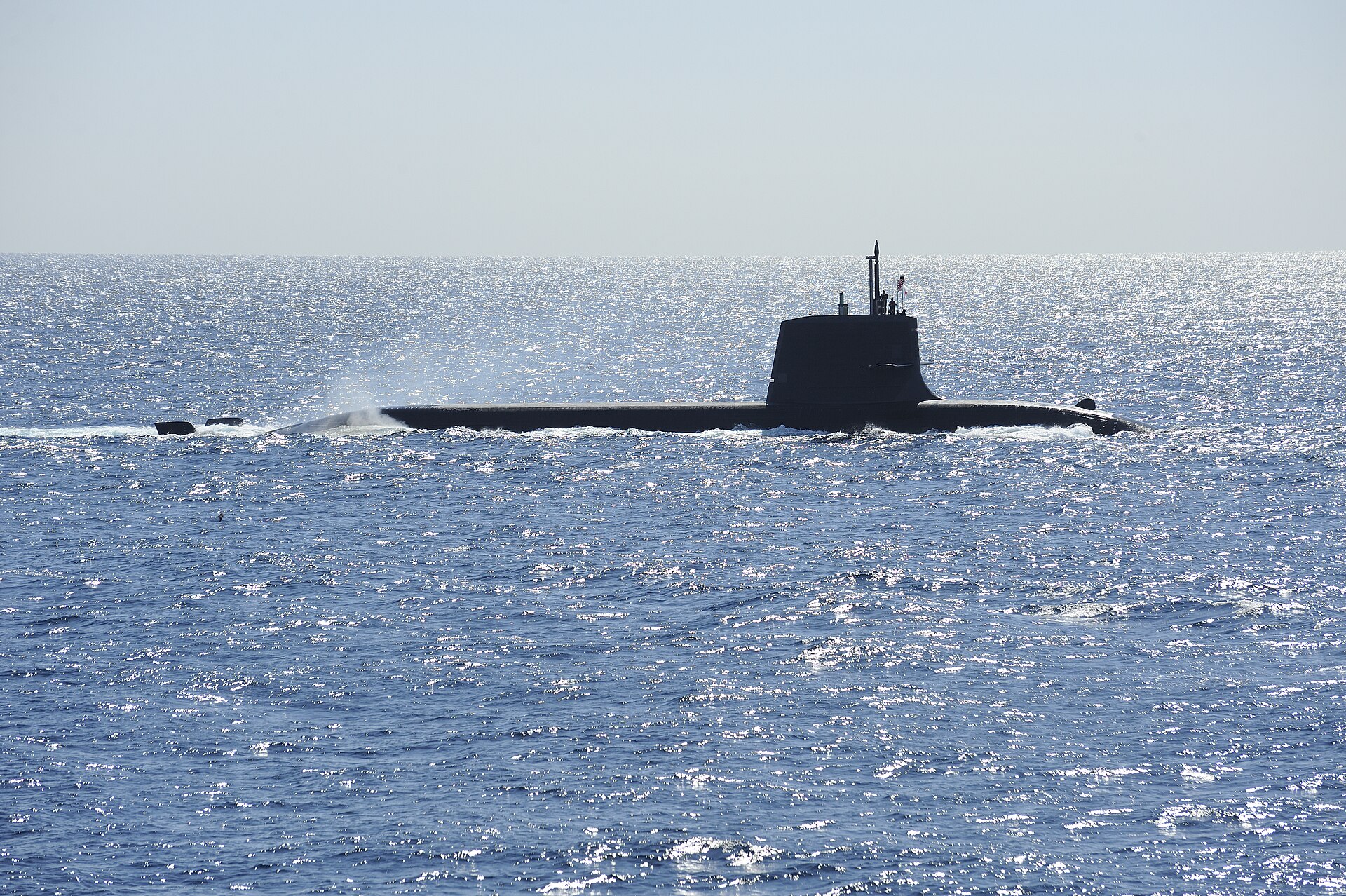
Introduced in 2009, the Cailleach-class (Veiled One) was engineered to resolve the “Snorkel Gap”—the vulnerability of conventional submarines when recharging batteries. By integrating four C.L.L. Stirling AIP units, the class can maintain a silent, low-speed creep for 14 days without surfacing. The hull utilizes a high-tensile steel alloy and an advanced non-circular “Leaf-Shape” cross-section, which optimizes the placement of massive conformal flank sonar arrays. This nature ensures the submarine retains a low acoustic profile, even when operating in high-traffic maritime corridors.
- In Service: 2009- present
- Displacement: 2’950 t surfaced
- Length/Beam/Draft: 84 m/9,0 m/8,5 m
- Power: diesel-electric propulsion, AIP, speed of 13 knots surfaced and 20 knots submerged
- Range: 6’100 nm AIP endurance at 6,5 kn (estimated)
- Armament: 6 x 550mm bow Torpedo tubes (30 Torpedoes, Mines, land attack cruise missiles or anti-ship missiles), decoy launchers
- Sensors: active sonar, passive sonar, ESM, echolot, radar
- Complement: 65
- Diving depth: unknown, estimated 450 m
- Built: 12
By PhantomII.Rider – Own work, CC BY-SA 4.0, https://commons.wikimedia.org/w/index.php?curid=127790041
Mine Countermeasure Vessels
Carran-class Minelayer
The Carran-class (The Sand-eel) marks the transition from coastal “sweepers” to blue-water capable Mine Countermeasures Vessels (MCMV). Commissioned in the late 1970s to serve alongside the An Gath-Dubh, the Carran was designed for the “outer archipelago”—the deep-water trenches and high-seas approaches where larger, more dangerous naval mines were likely to be deployed. At 752 tonnes, she is nearly four times the size of the An Gath-Dubh, trading a degree of shallow-water agility for the stability and endurance required for long-term station-keeping in the open ocean.
Description
The Carran-class was a pioneer in large-scale composite architecture. To handle a displacement of over 750 tonnes while maintaining a non-magnetic signature, the hull was constructed using a sandwich of high-strength Glass-Reinforced Plastic (GRP) and foam-core bracing. This monocoque construction allowed for a significantly larger internal volume, necessary to house the sophisticated mine-disposal electronics and increased crew complement. Despite her 60-meter length and 9.8-meter beam, the class maintains a remarkably shallow draft of 2.2 meters, allowing her to transition seamlessly from deep-water mine hunting to supporting littoral operations.
Propulsion is provided by two low-magnetic-signature diesel engines generating 4,000 kW. While her top speed of 22 knots is slightly lower than the An Gath-Dubh, the Carran was designed for “staying power” rather than sprinting.
The class introduced the federation’s first Unmanned Underwater Vehicle (UUV) Mine Disposal System. Rather than risking the ship or a diver, the Carran deploys remotely operated submersibles to identify and neutralize mines via a high-definition fiber-optic link. This is supported by a sophisticated sonar suite capable of distinguishing between natural seafloor debris and man-made threats in high-clutter environments.
For self-defense, the class carries the 30 mm md. 69 CIWS, a more refined version of the previous generation’s fire-control system, capable of intercepting sea-skimming missiles. The addition of a modern IFF (Identification Friend or Foe) system and an upgraded RWR ensures the Carran can operate safely as part of a larger task force or under the umbrella of coastal land-based air defense. While primarily a mine hunter, the class retains its modular rails for minelaying and depth charge deployment.
- In Service: 1979 – present
- Displacement: 752 t standard
- Length/Beam/Draft: 60 m/9,8 m/2,2 m
- Power: CODLAD 2 x MACO 12V-TDM-443 Diesel engines (1,7 MW each) with 3’400 kW combined, 21 kn
- Range: 4500 nm @ 15 kn
- Complement: 42
- Built: 12
Armament
| Initial | Modernised |
|---|---|
| 1 x 30 mm/55 md. 69 CIWS | 1 x 30 mm/55 md. 69/05 CIWS |
| Rails for Mines and Depth Charges | Rails for Mines and Depth Charges |
| UUV Mine Disposal System | UUV Mine Disposal System |
Sensors
| Initial | Modernised |
|---|---|
| SDCL-14M hull sonar | SDCL-34M hull sonar |
| SUMA-26 Navigation radar | SUMA-37 Navigation radar |
| RSMT-22C fire control system | RSMT-22E fire control system |
| CTAI-22 ESM | CTAI-42 ESM |
| ACNA-24 IFF | ACNA-45 IFF |
| GTAM-25 decoy launchers | GTAM-48 decoy launchers |

Ronnie Macdonald from Chelmsford and Largs, United Kingdom, CC BY 2.0 https://creativecommons.org/licenses/by/2.0, via Wikimedia Commons
Amphibious Ships
Carraig-class
The Carraig-class is a series of six landing ship tanks operated by the Federation Navy. Commissioned starting in 2000, the class was designed to provide the Federation with a dedicated beaching capability for amphibious operations within archipelagic environments. Unlike the larger Eilean and Cala classes, the Carraig-class is optimized for “hard-beaching” maneuvers, allowing for the direct delivery of heavy armor and personnel onto unimproved shorelines.
Description
Dimensions and hull
The Carraig-class features a shallow-draft, double-bottomed hull specifically reinforced for landing operations. The bow is equipped with a large, two-part bow door and an internal articulating ramp capable of supporting main battle tanks. To facilitate beaching, the ship utilizes a high-capacity ballast system, allowing the crew to adjust the trim and “pin” the vessel to the seabed during offloading.
The 3.0 m draft is achieved through a flat-bottomed hull design in the forward two-thirds of the vessel, transitioning to a specialized stern section housing the waterjet propulsion units.
Propulsion and performance
The propulsion system utilises a Combined Diesel and Diesel (CODAD) arrangement. Two MACO 20V-STDM-553 engines provide a total of 7 MW to two stern-mounted waterjets. The use of waterjets instead of traditional propellers prevents mechanical damage during shallow-water approaches and provides the high static thrust required to retract the vessel from the beach after cargo discharge. Maneuverability in constrained inlets is further enhanced by an integrated bow thruster.
Vehicle deck
The main tank deck can accommodate approximately 12 main battle tanks or up to 22 armored personnel carriers. The deck is accessible via the bow ramp and a stern gate for Ro-Ro operations. The ship also has modular cargo spaces for fuel, ammunition, and stores sufficient to support short‑term amphibious operations or logistics support without replenishment. The bow‑door and ramp can be operated directly from the ship’s main deck and are designed to support beach‑landings over unprepared or minimally improved shores. Four smaller LCVP MK5 that can carry thirty-five men or two light trucks are carried on davits, two each side of the ship’s superstructure.
Aviation facilities
An aft helicopter deck provides a landing spot for one medium-lift helicopter or multiple unmanned aerial vehicles (UAVs). While the ship lacks a permanent hangar, it can support VERTREP (Vertical Replenishment) and medical evacuation missions.
Crew and accommodation
The ship carries a complement of about 87 crew and up to 350 marines at full load. Crew accommodation is arranged in several decks within the superstructure and hull. The ship also has modular storage and bunks that can be reconfigured for humanitarian‑relief and disaster‑response missions, including temporary housing for displaced civilians if required.
Armament and self‑defence
The Carraig‑class carries a light self‑defence armament suite, consistent with its role as a regional‑scale amphibious transport and logistics vessel. The ship is fitted with one 100 mm dual‑purpose naval gun for shore‑bombardment and anti‑small‑craft fire, with a moderate rate of fire and guided‑fuze capability. Close‑in defence is provided by two 30 mm CIWS mounts, arranged to give 360‑degree coverage and support anti‑missile and anti‑small‑craft defence. The ship also carries two 40‑barrel 120 mm rocket launchers, providing area‑effect fire support for landing operations and limited fire‑support against shore‑targets. Additionally, the ship is fitted with two twin launchers for LBT‑85 man‑portable air‑defence systems (MANPADS), providing a modest very‑short‑range air‑defence capability against low‑altitude aircraft and helicopters.
Sensors and electronic warfare
The ship is equipped with a multipurpose radar (SIOM‑41‑type) providing medium‑range air and surface surveillance with a coverage radius of approximately 100–150 nautical miles. A separate navigation and surface‑search radar (SUMA‑37‑type) is integrated into the ship’s plotting and navigation systems for harbour‑manoeuvring, coastal navigation, and littoral‑environment operations. Fire‑control and combat‑management functions are handled by an RSMT‑22D‑type system, providing radar‑guided tracking and weapon‑control support for the 100 mm gun, 30 mm CIWS, and rocket launchers. The ship also carries an electronic support measures suite (CTAI‑42‑type), a directional electronic‑countermeasures system (CFAD‑42‑type), and an identification‑friend‑or‑foe subsystem (ACNA‑45‑type). Decoy launchers (GTAM‑48‑type) are fitted for missile‑defence and anti‑radar deception, providing limited soft‑kill protection against incoming ordnance.
- In Service: 2000 – present
- Displacement: 4’000 t full
- Length/Beam/Draft: 100m/16 m/3 m
- Power: CODAD 2 x MACO 20V‑STDM‑553 Diesel engines (3,5 MW each) with 7 MW combined, 15 kn
- Range: 3500 nm @ 12 kn
- Complement: 87 + 350 Marines
- Capacity: 4 LCVP + 12 tanks or 22 APCs
- Aviation: 1 helipad
- Built: 12
Armament
| Initial | Modernised |
|---|---|
| 1 x 100 mm md. 87 DP gun | – |
| 2 x 30 mm/55 md. 69/81 CIWS | – |
| 2 x 30 mm/60 md.60/80S “Seabhag 30” revolver cannons | – |
| 2 x twin LBT-85 launchers (+16 on magazine) | |
| 2 x 40-barrel 120 mm rocket launcher |
Sensors
| Initial | Modernised |
|---|---|
| SIOM-41 Multifunction radar | – |
| SUMA-37 Navigation radar | SUMA-43 Navigation radar |
| RSMT-22D fire control system | – |
| CTAI-42 ESM | – |
| CFAD-42 ECM Suite | |
| ACNA-45 IFF | – |
| GTAM-48 decoy launchers | – |

Indonesian Navy, Public domain, via Wikimedia Commons
Cala-class
The Cala‑class is a class of two landing platform docks operated by Lawenrania to supplement the larger Eòr‑nan‑Grian‑class landing helicopter docks. Commissioned in 2003 and 2004, the Cala‑class provides an amphibious platform oriented toward over‑the‑horizon landings, helicopter‑assisted resupply, and secondary amphibious assault support. The design draws on elements of late‑20th‑century LPD layouts, but incorporates a limited hangar capability to support rotary‑lift operations.
Description
Dimensions and hull
The class displaces approximately 13,500 tonnes standard and around 18,500 tonnes at full load. The hull measures about 181 metres in length, 27 metres in beam, and a maximum draft of 6.5 metres. This configuration allows access to regional ports and island‑group harbours without requiring deep‑water infrastructure. The ship is constructed in steel with a double‑bottom amidships and a subdivided compartment layout intended to limit flooding and sustain operations after limited combat damage.
Propulsion and performance
The ship is powered by a diesel‑electric propulsion system. Four MACO‑type medium‑speed diesel engines drive electric generators that feed into an internal bus. Two electric propulsion motors drive two shafts with controllable‑pitch propellers, giving a maximum speed of 21 knots. The diesel‑electric arrangement reduces mechanical vibration, improves fuel efficiency at cruising speeds of 16–18 knots, and enhances survivability through distributed power generation. At 16–18 knots, the ship has a range of about 8,500 nautical miles. The propulsion system allows for continuous‑duty operation in a mixed role of amphibious assault, logistics support, and occasional rapid redeployment.
Well deck and surface lift
The Cala‑class incorporates a large floodable well deck at the stern that can accommodate three air‑cushioned landing craft or four conventional LCU‑style landing craft. Four smaller LCVP MK5 that can carry thirty-five men or two light trucks are carried on davits, two each side of the ship’s superstructure. The well deck is flooded and drained rapidly to support repeated embarkation and disembarkation cycles during amphibious operations. Forward of the well deck is a main vehicle deck that provides space for approximately 800 tonnes of armored vehicles and support equipment. On a typical configuration, this corresponds to about 30 armored fighting vehicles. The ship also has dedicated cargo holds for fuel, ammunition, and stores sufficient to support 7–10‑day amphibious operations without external replenishment.
Aviation facilities
The Cala‑class incorporates a hangar located aft of the superstructure and forward of the flight deck, capable of accommodating up to four medium‑lift helicopters in a stacked‑park configuration. The hangar includes basic maintenance and fueling facilities for rotary‑lift operations, with limited ordnance support. Behind the hangar is a short flight deck that provides for one or two simultaneous helicopter landings, allowing for limited rotary‑lift operations without relying solely on the Eilean‑class for air support. The deck is rated for heavy‑lift helicopters and includes night‑operations lighting and ship‑borne meteorological support. Rotary‑lift operations are primarily oriented toward logistics, medical evacuation, and small‑scale troop insertion rather than sustained amphibious assault by air. The aviation complex is integrated into the ship’s logistics and cargo‑handling systems to support vertical replenishment from nearby supply ships.
Crew and accommodation
The ship carries a complement of about 290 crew and 400 marines, for short term surge operations a total of 700 marines can be accomodated. Crew accommodation is arranged in several decks within the superstructure and hull, with berthing separate from marine accommodation. Marine berthing is located amidships and aft, with sufficient ventilation and sanitary facilities for extended deployments. A small medical bay is located amidships, separate from the engineering spaces, with treatment beds and basic operating facilities suitable for routine medical support and minor casualties. The ship also includes modular storage and bunks that can be reconfigured for humanitarian‑relief and disaster‑response missions, including temporary housing for displaced civilians if required. A command and control space is included for coordinating small‑scale amphibious operations and logistical support, but this is less extensive than the Eilean‑class command centre.
Armament and self‑defence
The Cala‑class carries a light self‑defence armament suite. The ship is fitted with a 16‑cell vertical launching system for medium‑range surface‑to‑air missiles. This system provides short‑ to medium‑range air defence and can support limited anti‑aircraft‑threat interception. Close‑in defence is provided by two 30 mm close‑in weapon systems arranged to give 360‑degree coverage, supporting anti‑missile and anti‑small‑craft defence. The ship also carries two 30 mm gun systems, located amidships and aft, used for anti‑small‑craft fire. The armament configuration is designed to allow the ship to operate in contested environments when supported by dedicated air‑defence escorts, but not to conduct independent high‑intensity missile‑saturation engagements.
Sensors and electronic warfare
The ship is equipped with a primary volume‑search radar providing three‑dimensional air and surface surveillance with a range of approximately 120–180 nautical miles. A separate multifunction radar operates in the X‑band, supporting horizon‑search, tracking, and fire‑control guidance for the vertical launcher, 30 mm CIWS, and 30 mm guns. A dedicated surface‑search and navigation radar is integrated into the ship’s navigation and combat management system for harbour‑manoeuvring, coastal navigation, and littoral‑environment operations. The combat‑management arrangement is derived from a 9LV‑type architecture, adapted for coordinating amphibious landings, rotary‑lift operations, and sensor‑guided navigation. The electronic‑warfare suite includes an electronic support measures array, a directional electronic‑countermeasures system, and an identification‑friend‑or‑foe subsystem. Decoy launchers are fitted for missile‑defence and anti‑radar deception.
Operations and doctrine
The Cala‑class is designed to operate as a supporting element of amphibious task groups, providing regional‑scale amphibious capability that complements the larger Eilean‑class LHDs. The ship is capable of conducting over‑the‑horizon landings using a mix of landing craft and limited rotary‑lift operations while maintaining a modest armament load. The diesel‑electric propulsion, moderate top speed, and long range support a doctrine that prioritises persistent presence in archipelago‑type environments over short‑duration dash‑to‑station operations. The class also supports non‑combat roles such as disaster‑relief, evacuation, and support to civil authorities, with its large internal spaces, medical facilities, and logistics‑handling capability.
- In Service: 2003 – present
- Displacement: 13’500 t standard
- Length/Beam/Draft: 181 m/27 m/6,5 m
- Power: CODLAD 2 x MACO 16V-STDM-563 Diesel engines (8 MW each) with 16’000 kW combined, 20 kn
- Range: 8500 nm @ 18 kn
- Complement: 290 + 400 Marines (700 Marines surge capacity)
- Capacity: 3 LCAC + 4 LCVP + 30 Vehicles
- Aviation: Hangar for 4 Medium Lift Helicopters + deck for 2 × Heavy Lift Helicopters
- Built: 2 (Cala na Màthar, Cala nan Gaisgeach)
Armament
| Initial | Modernised |
|---|---|
| 2 x 30 mm/55 md. 69/05 CIWS | – |
| 1 x 8-cell self-defence VLS (quad-pack LBT-21E) | – |
| 2 x 30 mm/60 md.60/05S “Seabhag 30” revolver cannons | – |
Sensors
| Initial | Modernised |
|---|---|
| RESA-44 air and surface surveillance radar | – |
| RESA-42 air and surface search, tracking, and guidance radar | – |
| SUMA-37 Navigation radar | SUMA-43 Navigation radar |
| RSMT-22D fire control system | – |
| CTAI-42 ESM | – |
| CFAD-42 ECM Suite | |
| ACNA-45 IFF | – |
| GTAM-48 decoy launchers | – |

Hmfcalum, CC BY-SA 3.0 https://creativecommons.org/licenses/by-sa/3.0, via Wikimedia Commons
Eilean-class Landing Helicopter Dock (LHD)
The Eilean-class (Island) is a series of four multi-role amphibious assault ships operated by the Federation Navy. Commissioned between 2005 and 2010, the class was designed to succeed the Sgùrr-class LHD. Designed for amphibious assault, airmobile deployment, and regional logistics, the ship functions as a mobile platform for marine forces, rotary‑lift operations, and coordinated task‑group deployments across the Laywen archipelago.
Description
Dimensions and hull
The class is built to a displacement of approximately 14,500 tonnes standard, rising to about 19,000 tonnes at full load. The hull measures 197 metres in length, 30 metres in beam, and a maximum draft of 7.0 metres. This configuration allows operation in archipelago‑type waters and moderate‑depth approaches without requiring excessively deep‑water infrastructure. The hull form is a through‑deck amphibious ship with a stern floodable well deck, giving the vessel a characteristic LHD silhouette. The hull is constructed in steel, with a double‑bottom section amidships and a subdivided compartment layout designed to limit flooding and sustain operations after minor combat damage.
Propulsion and performance
The ship is powered by a diesel‑electric propulsion system. Four MACO 12V‑type high‑torque diesel engines, each rated at approximately 6’000 kW at 1200 revolutions per minute, drive electric generators that feed into a central electrical bus. Two electric propulsion motors drive two shafts with controllable‑pitch propellers, giving a maximum speed of 24 knots. The diesel‑electric arrangement provides continuous‑duty efficiency at cruising speeds, reduces mechanical vibration transmitted into the hull, and improves survivability through distributed power generation. At 16–18 knots, the ship has a range of 9’500 nautical miles, sufficient for long‑distance transits between island groups without refuelling.
Well deck and surface lift
The Eilean‑class incorporates a large floodable well deck at the stern that can accommodate two air‑cushioned landing craft and five conventional LCVP‑style landing craft. A vehicle deck is located immediately forward of the well deck and above the lower machinery spaces. The vehicle deck provides space for approximately 1,200 tonnes of armored vehicles and support equipment, typically configured for 40 armored fighting vehicles. Vehicle stowage is arranged in modular bays to facilitate rapid embarkation and disembarkation during amphibious rehearsal and actual operations. The ship also has dedicated cargo holds for fuel, ammunition, and technical stores that support sustained amphibious operations without external replenishment for up to 7–10 days.
Aviation facilities
The ship features a full‑through flight deck extending over the major portion of the length, with a starboard‑side superstructure that houses the bridge, air‑traffic control, and command spaces. The flight deck is coated with a heat‑resistant material to support medium‑lift rotary‑wing operations. The deck is rated for continuous rotary‑lift operations in day and night conditions, with provisions for night‑navigation lighting and ship‑borne meteorological support. The ship carries a total of 15 medium‑lift helicopters on a typical air‑group configuration. The deck is laid out with six designated helicopter landing spots. The aviation complex includes a maintenance and ordnance area, fueling facilities, and a small ordnance‑storage locker, permitting limited sustained rotary‑lift operations without shore support.
Crew and accommodation
The ship carries a complement of 320 crew and 800 marines at full load. Crew accommodation is distributed in several decks within the superstructure and hull, with berthing separate from marine accommodation. Marine berthing is arranged in modular spaces forward of the vehicle deck and amidships, with sufficient ventilation and sanitary facilities for long‑duration deployments. There is a dedicated medical bay located amidships, separate from the engineering spaces, with operating tables, intensive‑care facilities, and ward beds sufficient for treating multiple casualties. The ship also includes storage spaces and modular bunks that can be reconfigured for disaster‑relief and humanitarian‑aid missions, including temporary housing for displaced civilians if required. There is a command and control centre for joint amphibious task‑force operations, equipped with communications suites, plotting tables, and multi‑source sensor feeds.
Armament and self‑defence
The ship is fitted with a light self‑defence armament suite. The primary air‑defence system is a 16‑cell self-defence cold launch vertical launching system for medium‑range surface‑to‑air missiles. Close‑in defence is provided by two 30 mm close‑in weapon systems arranged to give 360‑degree coverage, supporting anti‑missile and anti‑small‑craft defence. The ship also carries two 30 mm gun systems, located forward and amidships, used for anti‑small‑craft fire. The armament configuration is designed to allow the ship to operate in contested environments when supported by dedicated air‑defence escorts, but not to conduct independent high‑intensity missile‑saturation engagements.
Sensors and electronic warfare
The ship is equipped with a primary volume‑search radar operating in the S‑band, providing three‑dimensional air and surface surveillance with a range of approximately 150–200 nautical miles. A separate multifunction radar in the X‑band supports horizon‑search, tracking, and fire‑control guidance for the vertical launcher and guns. A dedicated surface‑search and navigation radar is integrated into the combat system for harbour manoeuvring, coastal navigation, and littoral‑environment operations. The fire‑control and combat management arrangement is derived from a 9LV‑type combat‑management architecture, adapted to coordinate air‑plan management, amphibious assault sequencing, and sensor‑guided manoeuvring. The electronic‑warfare suite includes an electronic support measures array, a directional electronic‑countermeasures system, and an identification‑friend‑or‑foe subsystem. Several decoy launchers are fitted for missile‑defence and anti‑radar deception.
Operations and doctrine
The Eilean‑class is designed to operate as a core element of amphibious task groups, conducting over‑the‑horizon assaults using rotary‑lift and air‑cushioned landing craft while providing on‑board command and logistics support. The ship is capable of conducting long‑range deployments, anchoring offshore of contested coastlines, and launching repeated waves of landing craft and helicopters without frequent at‑sea replenishment. The diesel‑electric propulsion, moderate top speed, and long range support a doctrine that prioritises persistent presence in archipelago‑type environments over short‑duration dash‑to‑station operations. The ship is also usable in non‑combat roles such as disaster‑relief, evacuation, and support to civil authorities, with its large internal spaces, medical facilities, and logistics‑handling capability. The design reflects a continuum of development from the Sgùrr‑class LHDs, scaling up aviation and marine lift capacity while maintaining a modest armament load and regionally‑focused endurance profile.
- In Service: 2007 – present
- Displacement: 14’300 t standard
- Length/Beam/Draft: 197 m/30 m/7 m
- Power: CODLAD 4 x MACO 12V-STDM-563 Diesel engines (6 MW each) with 24’000 kW combined, 24 kn
- Range: 9500 nm @ 18 kn
- Complement: 320 + 800 Marines
- Capacity: 2 LCAC + 5 LCVP + 40 Vehicles
- Aviation: Hangar for 15 Medium Lift Helicopters + deck for 6 × Medium Lift Helicopters
- Built: 4
Armament
| Initial | Modernised |
|---|---|
| 2 x 30 mm/55 md. 69/05 CIWS | – |
| 2 x 8-cell self-defence VLS (quad-pack LBT-21E) | – |
| 2 x 30 mm/60 md.60/05S “Seabhag 30” revolver cannons | – |
Sensors
| Initial | Modernised |
|---|---|
| RESA-44 air and surface surveillance radar | – |
| RESA-42 air and surface search, tracking, and guidance radar | – |
| SUMA-37 Navigation radar | SUMA-43 Navigation radar |
| RSMT-22D fire control system | – |
| CTAI-42 ESM | – |
| CFAD-42 ECM Suite | |
| ACNA-45 IFF | – |
| GTAM-48 decoy launchers | – |

Adam K. Thomas, U.S. Navy, Public domain, via Wikimedia Commons
Auxiliary Ships
Beòthalachd-class ARS (Repair & Salvage Ship)
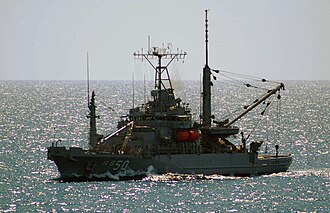
The Beòthalachd-class (Vitality) repair and salvage ships entered service in 1985 to provide battle damage repair, towing, and diving support to surface combatants and auxiliaries. Two vessels were constructed as dedicated fleet repair platforms, filling the gap between Lùth AFS stores and shore facilities.
- Service: 1985 – present
- Displacement: 3’500 t full
- Length/Beam/Draft: 79 m/15 m/4,2 m
- Power: 2 × MACO 12V-TDM-352 (2,600 kW each), CODAD, 20 kn, 2 shafts
- Range: 9,000 nm @ 15 kn
- Complement: 100
- Armament: 2 x 30 mm md. 69 CIWS, 2 x 30 mm/60 md.60S “Seabhag 30” revolver cannons
- Sensors: SUMA-37 Surface/Navigation radar, RSMT-22C Fire control system, CTAI-32 ESM, ACNA-24 IFF, GTAM-39 decoy launcher
- Repair facilities: 1 × 40-tonne main crane; 1 × 15-tonne auxiliary crane; machine shop; foundry; welding bays; dry dock (150 t capacity); diving support
- Cargo: 450 t spares + 1,200 m³ fuel
- Aviation: Hangar + deck for 2 × Medium Lift Helicopters
- Built: 2 ship
National Museum of the U.S. Navy, Public domain, via Wikimedia Commons
Ban-tighearna-class Tender
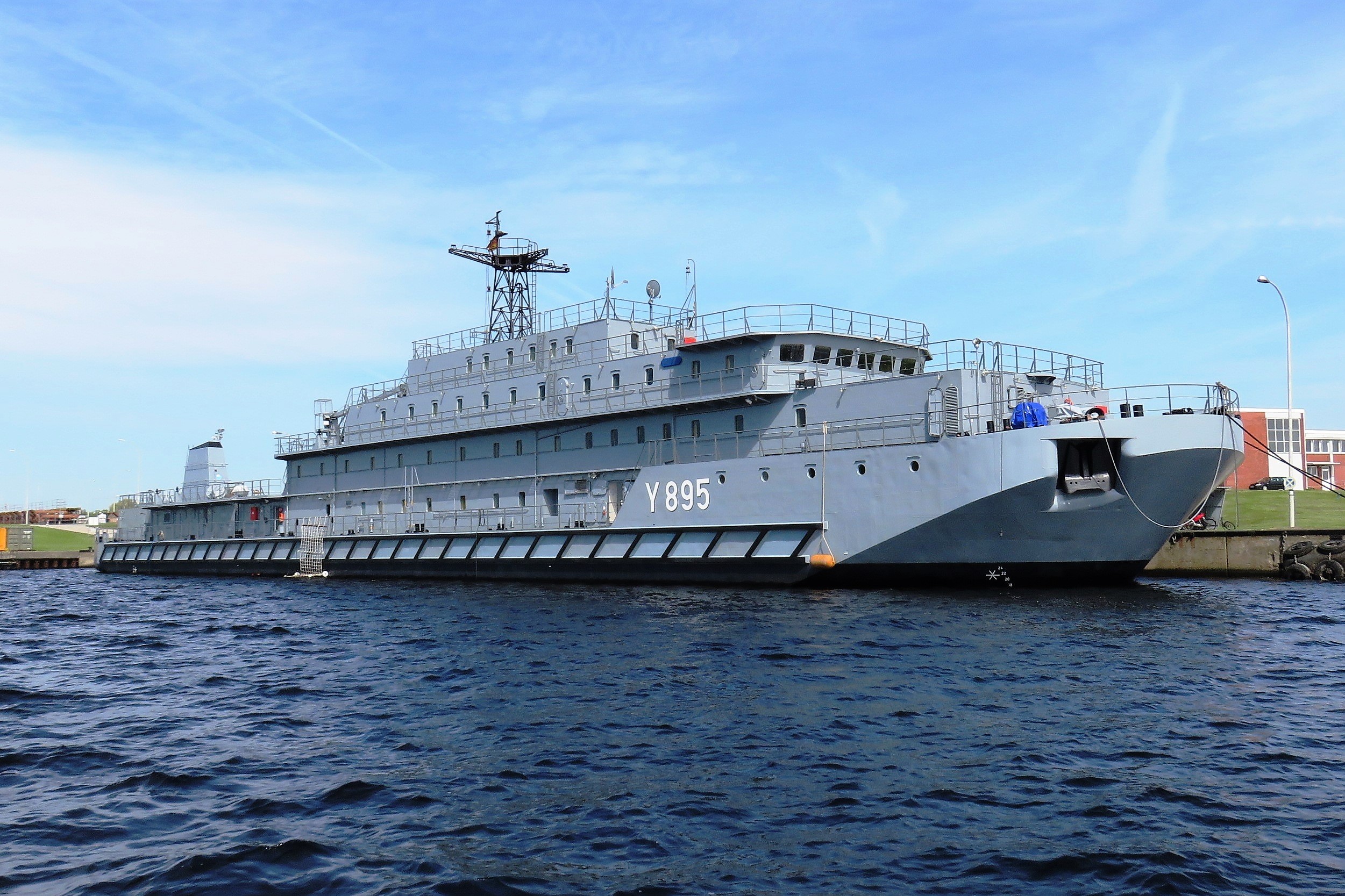
The Ban-tighearna-class (Matriarch) tenders replaced the obsolete Sgàth-class in 1988, providing basing, fuel, and maintenance support for fast attack craft (FAC), mine countermeasures vessels, and corvettes at forward island stations. Six vessels were constructed for dispersed archipelago operations, entering service 1988-1990 ahead of Sgàth decommissioning.
Drawing from earlier designs, the Ban-tighearna-class-class featured extensive accommodations for squadron staff and configurable holds for FAC/MCM support. Forward stations maintained 4 FACs operational continuously, with missile/parts replenishment from Saorsa AORs.
- Service: 1988 – present
- Displacement: 3’400 t full
- Length/Beam/Draft: 93 m/16 m/4,5 m
- Power: 2 × MACO MACO 12V-TDM-462 (6,600 kW each), CODAD, 20 kn, 2 shafts
- Range: 6,000 nm @ 15 kn
- Complement: 75 + 40 technicians + 190 berths
- Armament: 2 x 30 mm/55 md. 81 CIWS, 2 x 30 mm/60 md.60/80S “Seabhag 30” revolver cannons, 1 x twin LBT-85 launchers (+12 on magazine)
- Sensors: SUMA-37 Surface/Navigation radar, RSMT-22C Fire control system, CTAI-32 ESM, ACNA-24 IFF, GTAM-39 decoy launcher
- Facilities: Fuel: 1,200 m³ diesel/400 m³ avgas; ammo storage (100 t); repair workshop; FAC berthing (4 craft); MCM battery charging
- Cargo: 400 t containerized stores; 2 × 25 t cranes
- Aviation: 1 Helipad
- Built: 6 ships (Ban-tighearna (The Lady / Matriarch), Glandair (The Purifier / Cleanser), Cagailt (The Hearth), Seun (The Charm / Amulet), Fasgadh (The Shelter), Moire (The Great Mother))
Ein Dahmer, CC BY-SA 4.0 https://creativecommons.org/licenses/by-sa/4.0, via Wikimedia Commons
Srùthan-class replenishment ship
The Srùthan-class (Streamlet) is a series of six light replenishment vessels commissioned by the Federation Navy between 1993 and 1995. Designed as a logistical intermediary, the class functions as the “connective tissue” of the fleet, sustaining littoral combatants—including corvettes, fast attack craft (FAC), and patrol vessels—within shallow archipelagic environments. By operating in restricted waters inaccessible to the larger Tobar-class fleet oilers, the Srùthan-class provides a decentralized supply chain that supports both front-line tenders and isolated civilian communities.
Description
The primary mission of the Srùthan-class is the forward replenishment of littoral strike groups and the resupply of submarine and FAC tenders. This role reduces the logistical strain on strategic assets and ensures that small-ship flotillas can maintain high operational tempos without returning to major naval bases. Beyond military applications, the ships are tasked with humanitarian assistance and disaster relief (HADR), serving as a primary link to small-island communities during emergencies.
Designed for operation in shallow, archipelagic waters where deeper‑draft tankers cannot operate safely, the Srùthan‑class is optimized for multi‑product transfer and localized maintenance support. The ship features a modular, midships multi‑purpose deck served by a 10‑tonne capacity knuckle‑boom crane, enabling it to carry ISO containers, spare engine modules for FACs, and other mission‑specific stores. This configuration supports both forward‑anchorage resupply and limited technical support for smaller hulls, including FAC and submarine tenders, thereby reducing the frequency with which the Tobar‑class AORs must enter confined or shallow anchorages.
The hull is constructed with an ice‑strengthened Category 1D rating, permitting year‑round operations in the colder, northern reaches. The ship carries marine and aviation fuel, fresh water, food, ammunition, and general logistical matériel necessary to sustain corvettes, FACs, patrol vessels, and the tenders that support them. A small medical station is included on board, capable of managing minor injuries with the ship’s own personnel and providing a basic care platform for more serious cases when augmented by a visiting medical officer.
The Srùthan‑class is fitted with an aft‑located flight deck rated for medium‑lift helicopters, enabling limited vertical replenishment and the transfer of small‑scale cargo or personnel between the vessel and shore or nearby anchorages. The ship’s role combines littoral‑renishment, tender support, and regional disaster‑relief, making it a flexible, low‑profile auxiliary that enhances the navy’s ability to sustain dispersed, shore‑proximate operations in the archipelago.
- Service: 1993 – present
- Displacement: 3’600 t full
- Length/Beam/Draft: 100 m/15 m/4 m
- Power: 1 × MACO 12V-STDM-563 6 MW, 18 kn, bow thruster
- Range: 4,000 nm @ 12 kn
- Complement: 40 + 40 technicians
- Armament: 2 x 30 mm/60 md.60/85 “Seabhag 30” twin revolver cannons, 1 x twin LBT-85 launchers (+12 on magazine)
- Sensors: SUMA-37 Surface/Navigation radar, RSMT-22C Fire control system, CTAI-32 ESM, ACNA-24 IFF, GTAM-39 decoy launcher
- Facilities: Fuel: 700 m³ diesel/60 m³ avgas; ammo storage (160 t); repair workshop
- Cargo: 28 places for ISO containers; 2 × 25 t cranes, 280 m³ fresh water
- Aviation: 1 Helipad
- Built: 6 ships

Mike Banzhaf, U.S. Navy, Public domain, via Wikimedia Commons
Tobar-class Fleet Replenishment Oiler (AOR)
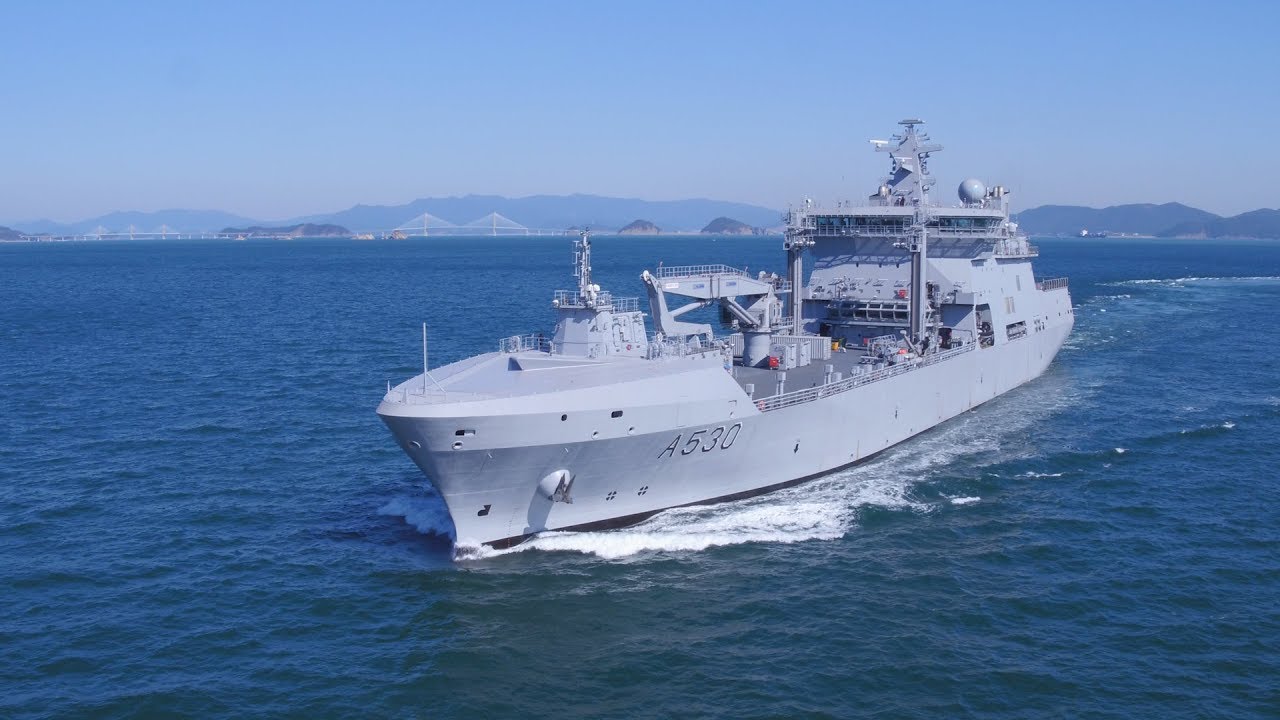
The Tobar-class (The Well) is a series of six naval logistic vessels commissioned between 2006 and 2015. Designed to replace the aging single-hulled tankers of the previous generation, the Tobar-class provides the Federation Navy with the capacity for simultaneous Replenishment at Sea (RAS) of fuel, potable water, and palletized solid stores.
Description
Dimensions and hull
Each Tobar‑class ship has a full‑load displacement of approximately 24,000 tonnes. The hull measures about 165 metres in length, 28 metres in beam, and a maximum draft of 6.5 metres, giving it the seakeeping and internal capacity required for mid‑ and long‑range support operations. The hull is a conventional merchant‑derived form with a bulbous bow, a double‑bottom fuel tank arrangement amidships, and an aft‑located superstructure. The ship is constructed of steel with a moderately compartmentalised layout, balancing maintenance simplicity against survivability requirements for a non‑combatant but critical auxiliary vessel.
The ship also carries two rigid‑hulled inflatable boats (RHIBs) and two fast‑rescue‑craft, used for personnel transfer, light‑cargo operations, and at‑sea rescue.
Propulsion and performance
The ship is powered by a combined diesel‑and‑diesel (CODAD) propulsion system. Two medium‑speed diesel engines drive a common gearbox arrangement that feeds two shafts with controllable‑pitch propellers, giving a maximum speed of 20 knots. The propulsion system is optimised for endurance, with a range in excess of 9,000 nautical miles at 16 knots, sufficient to support operations across Laywen‑related sea lanes without frequent refuelling. The ship carries a complement of about 125 crew, including both military and civilian‑style specialists, and is equipped for sustained periods at sea with provisions for extended underway replenishment operations.
Cargo and replenishment capacity
The Tobar‑class has separate fuel and solid‑cargo divisions within its hull. The ship can carry approximately 11’000 m³ and aviation fuel in integral double‑hull tanks. In addition to fuel, the ship carries around 1,500–2,000 tonnes of ammunition and dry cargo, including spares, ordnance, and technical supplies used by frigates, destroyers, and amphibious vessels. Replenishment‑at‑sea equipment includes multiple abeam‑replenishment stations on both port and starboard sides, as well as stern‑replenishment rigs, allowing the ship to service more than one vessel simultaneously. The ship also supports vertical replenishment, with aviation fuel and cargo passed via helicopters operating from its aft deck. It also carries 800 m³ of potable water as well as a water cleaning facility and 500 m² of refrigerated space for fresh produce.
Aviation facilities
A permanent hangar and a large aft flight deck support one heavy-lift helicopter or two medium utility helicopters. The deck is rated for Level 1 Class 1 operations, meaning it can recover aircraft in heavy seas (Sea State 5), reflecting the ship’s role as a secondary search-and-rescue (SAR) hub for the archipelago.
- In Service: 2006 – present
- Displacement: 24’000 t full load
- Length/Beam/Draft: 165 m/28 m/7 m
- Power: CODAD 2 x MACO 08V-TDM-562 Diesel engines (7.6 MW each) with 15’200 kW combined, 20 kn, Twin Shafts + Bow & Stern Thrusters
- Range: 9000 nm @ 16 kn
- Complement: 55
- Cargo: 11’000 m³ (diesel fuel, aviation fuel), 800 m³ (fresh water)
- Aviation: Hangar for 15 Medium Lift Helicopters + deck for 6 × Medium Lift Helicopters
- Built: 6
Armament
| Initial | Modernised |
|---|---|
| 2 x 30 mm/55 md. 69/05 CIWS | – |
| 2 x 30 mm/60 md. 60/05S “Seabhag 30” revolver cannons | – |
Sensors
| Initial | Modernised |
|---|---|
| SUMA-37 Navigation radar | SUMA-43 Navigation radar |
| RSMT-22D fire control system | – |
| CTAI-42 ESM | – |
| CFAD-42 ECM Suite | – |
| ACNA-45 IFF | – |
| GTAM-48 decoy launchers | – |
Adam K. Thomas, U.S. Navy, Public domain, via Wikimedia Commons
Sine-class Hospital Ship
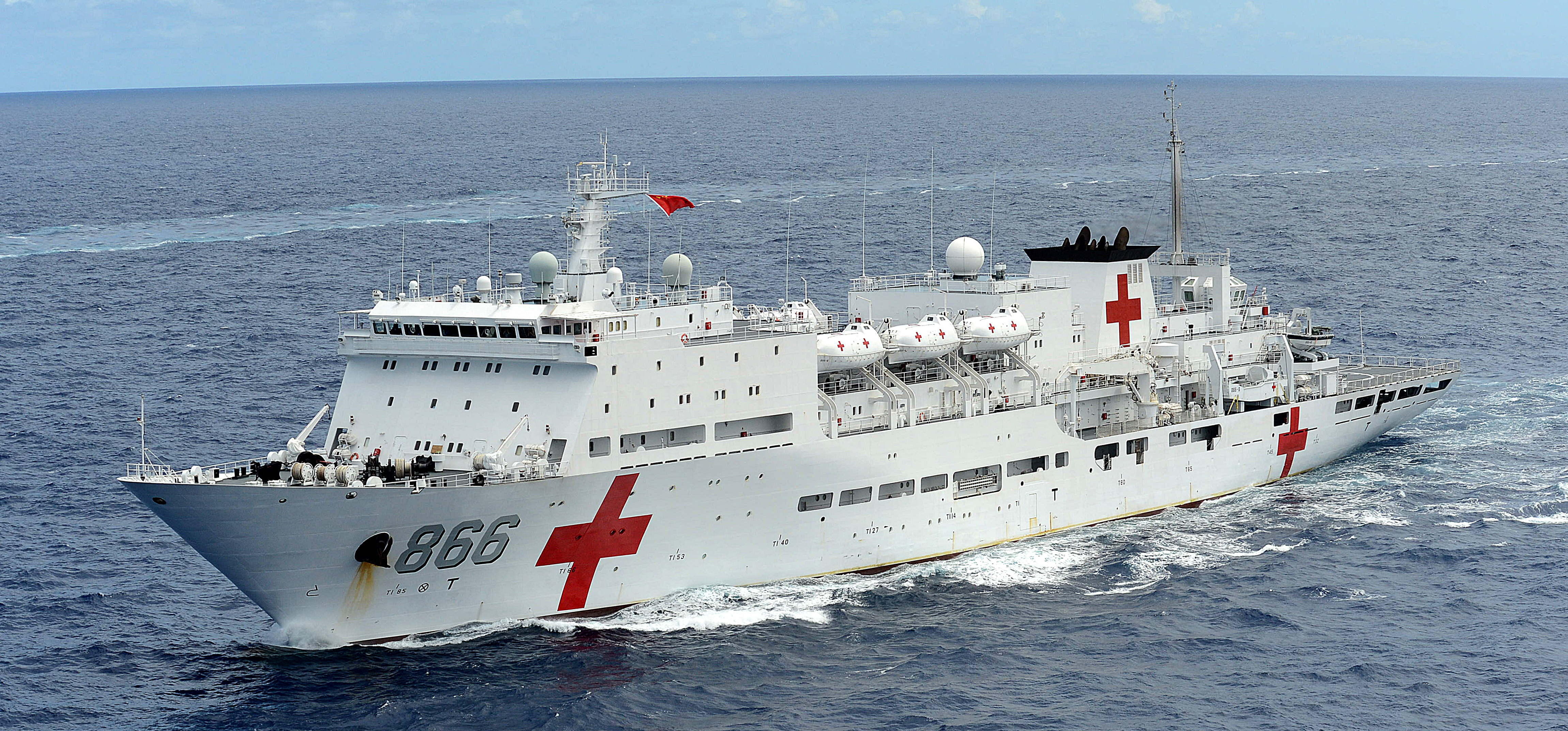
The Sine-class (The Kind One) is a class of two hospital ships commissioned between 2006 and 2009. They are equiped with 6 operating theatres, and can perform 40 major surgeries a day, in addition to X-ray, ultrasound, computerized tomography, hypothermia, hemodialysis and dental facilities.
- In Service: 2006 – present
- Displacement: 18’000 t full load
- Length/Beam/Draft: 160 m/27 m/6,5 m
- Power: CODLAD 2 x MACO 08V-TDM-562 Diesel engines (7.6 MW each) with 15’200 kW combined, 18 kn, Electric Azimuth Pods
- Range: 10’000 nm @ 16 kn
- Complement: 280
- Facilities: 250 beds (60 ICU + 190 General)
- Sensors: SUMA-37 navigation radar
- Aviation: Hangar for 1 Medium Lift Helicopters + Flight Deck capable of handling two heavy-lift helicopters simultaneously for “Life-Flight” operations.
- Built: 6
U.S. Navy photo by Mass Communication Specialist 1st Class Shannon Renfroe, Public domain, via Wikimedia Commons
Further vessels
- 6 ocean-going tugs
- 4 training ships
- 4 survey ships
- 2 intelligence ships